
Common Misconceptions about Solar Power Plants
Common misconceptions about solar power plants: a great investment and environmental solution everyone wants, especially amid recent energy crises.
Why Misconceptions Persist
Solar power plants look mechanically simple from a distance: modules face the sun, inverters convert DC electricity, and energy enters the electrical system. That visual simplicity can hide the number of variables that influence output, maintenance, safety, and long-term operation.
Many misconceptions begin with a statement that is partly true under a limited set of conditions. For example, stronger sunlight can increase available PV current, but that does not mean the hottest climate automatically produces the most energy. Likewise, batteries can provide backup, but adding a battery does not automatically make every PV system operate during a grid outage.
Marketing comparisons can also remove important context. Module efficiency, plant yield, installed capacity, annual energy, temperature behavior, and financial return are different measures. A claim using one of them should not be assumed to prove the others.
A useful way to evaluate solar claims is to ask what is being measured, under which conditions, and at what system boundary. Most oversimplifications become obvious once those three questions are answered.
Hot Regions and Module Temperature
One common assumption is that the hottest location will always produce the most solar electricity. High irradiance is useful for PV generation, but module temperature also affects electrical behavior. For crystalline-silicon modules, increasing cell temperature at comparable irradiance generally reduces voltage and available power.
This means a sunny but very hot module can behave differently from the same module under strong irradiance and cooler conditions. The actual energy result depends on solar resource, temperature, wind, module design, mounting, orientation, and other plant conditions.
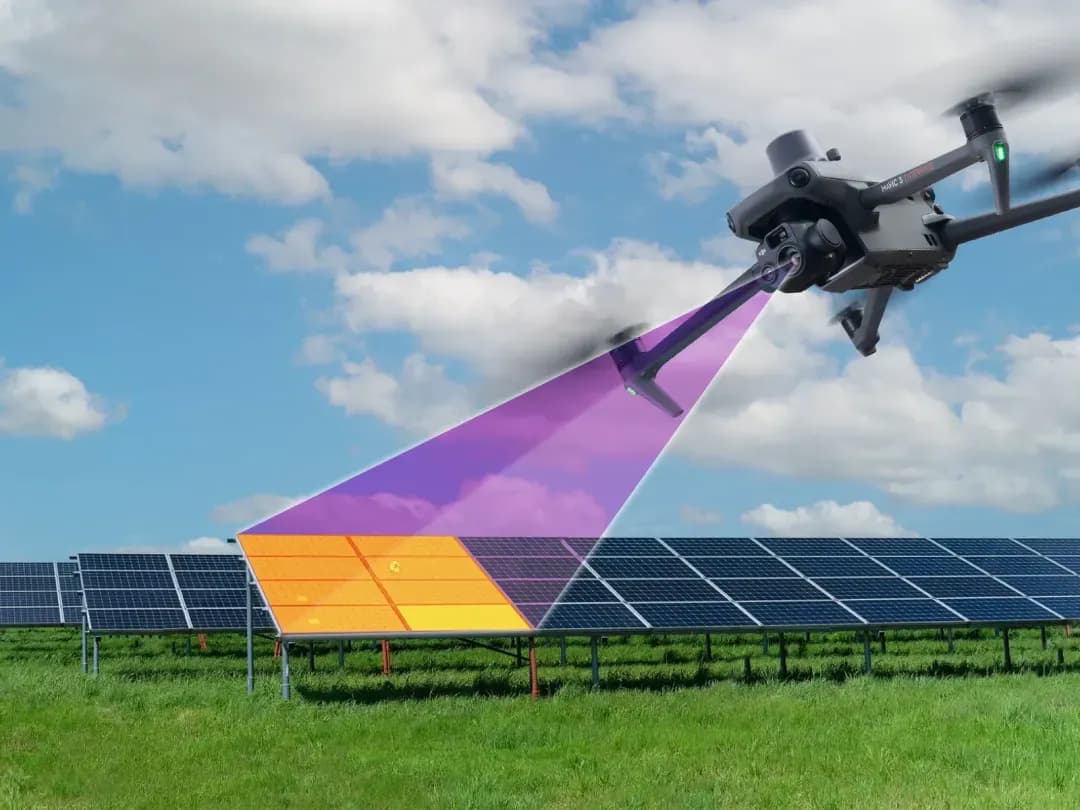
Temperature is therefore not a simple indicator of production. A thermal image showing a hot module or cell also should not be interpreted as evidence that the component is producing more electricity. Localized heating can instead indicate shading, mismatch, connection resistance, cell behavior, or another condition requiring investigation.
Thermography must account for irradiance, wind, cloud conditions, module temperature, reflections, and viewing angle. IEC 62446-3 addresses these aspects within outdoor thermographic inspection of operating PV systems and does not impose one universal module-temperature range for all installations.
High solar resource can support strong annual production, but "hotter means better" is not an accurate general rule for PV modules.
Cloudy Weather and Diffuse Light
Another misconception is that PV modules stop producing electricity whenever the sky is cloudy. Clouds reduce and redistribute solar irradiance, but diffuse light can still reach the module surface and produce electrical output.
The amount depends on cloud thickness, solar position, local climate, module orientation, and other conditions. A lightly overcast period can behave very differently from dense storm clouds, so a single percentage reduction should not be assumed across all cloudy weather.
Cloud movement can also create rapidly changing plant output. Parts of a large array may receive different irradiance for short periods, and temporary brightening can occur when sunlight is scattered or reflected around cloud edges. These changes matter when comparing inverter or string data.
Cloud conditions are particularly important during thermal inspection. Modules captured before and after a cloud transition may not have comparable electrical loading or surface temperature, even when the same camera and route are used.
PV systems therefore continue to operate under many cloudy conditions, but their output is determined by the irradiance actually reaching the array rather than by a simple clear-versus-cloudy category.
Backup Power and Generators
A PV plant does not automatically provide power during a utility outage. Many grid-connected inverter systems are designed to disconnect or stop supplying the grid when required by the system architecture and connection rules.
Backup operation requires equipment configured for that purpose. Batteries, dedicated backup inverters, transfer equipment, controls, protected-load panels, or generators may form part of the design depending on what needs to remain energized.
A battery is not mandatory for every PV system. A grid-connected site can use solar electricity during normal operation and rely on the grid when PV production is insufficient. Storage becomes relevant when the project has a defined reason for shifting energy or supporting loads under another operating condition.
A generator is similarly project-dependent. Some sites require extended backup beyond what the chosen battery system can support, while others do not need generator backup at all.
The important distinction is between solar generation and continuity of supply. Installing modules does not answer the question of what happens when sunlight is unavailable or the grid fails; that requires a separate system-design decision.
Roof Installation and Structural Questions
Another common belief is that any roof with enough sunlight is suitable for PV modules. Solar access is necessary, but structural capacity, roof condition, waterproofing, mounting method, wind exposure, fire access, drainage, and maintenance access can all affect whether installation is practical.
Roof age and condition matter because the PV array may remain in place for a long operating period. Installing equipment over a roof that soon requires major repair can create additional removal and reinstatement work. The roof and PV project should therefore be considered together.
Structural verification is a separate engineering task. Aerial imagery, visual inspection, or software layout tools can help document roof geometry, but they do not establish whether the structure can carry the relevant dead, wind, snow, or other design loads.
Penetrating and non-penetrating mounting systems also create different design questions. The correct choice depends on roof construction, waterproofing, loading, attachment details, local conditions, and manufacturer information.
A roof that appears large enough in plan view is therefore only a candidate. Final suitability requires the appropriate structural and building-level verification.
Maintenance Expectations and Realistic Effort
Solar plants are often described as having little maintenance because PV modules contain no moving parts. That does not mean the complete plant is maintenance-free. Inverters, connectors, cables, protection devices, structures, vegetation, drainage, communications, monitoring, and module surfaces can all require attention.
Cleaning needs depend on the environment. Dust, pollen, bird contamination, agricultural activity, rainfall, module tilt, and local pollution influence whether cleaning is useful and how often it may be justified. A fixed cleaning schedule should not be assumed for every site.
Vegetation can also affect access and shading on ground-mounted plants. Electrical equipment may require inspection after alarms or maintenance, while connectors and cabling can be affected by environmental exposure or physical disturbance.
Thermal inspection can help identify candidate abnormalities across large arrays, but one survey is not continuous monitoring. Electrical tests remain necessary when the maintenance question concerns insulation, polarity, current, voltage, continuity, or another directly measurable property.
Realistic maintenance planning therefore means matching effort to plant conditions. Low-maintenance equipment can reduce routine work without eliminating inspection or corrective maintenance entirely.
Installation Time, Roof Type and Site Constraints
Claims about how quickly a PV system can be installed often ignore site conditions. Project duration depends on system size, roof or ground conditions, structural work, electrical infrastructure, equipment delivery, access, weather, permitting processes, grid connection, and commissioning requirements.
Roof type can change the installation method substantially. Flat roofs, pitched roofs, standing-seam metal roofs, tile roofs, and other structures require different attachment, waterproofing, access, and structural considerations.
Ground-mounted plants introduce another set of constraints. Terrain, foundations, drainage, roads, fencing, trenching, grid equipment, vegetation, and logistics can affect how construction proceeds. A large open field is not automatically a simple site.
Electrical work also has its own sequence. Modules may be mechanically installed before strings, combiner equipment, inverters, protection, communications, and grid connection are fully commissioned.
For that reason, a universal installation duration is not technically meaningful. The correct schedule comes from the actual design, site, approvals, resources, and construction sequence.
How to Check a Claim Before Believing It
Start by identifying the metric. If a claim says one system is "better," determine whether it refers to module efficiency, annual energy yield, installed capacity, cost, reliability, temperature behavior, or another measure. Those terms cannot be substituted for one another.
Next, check the test conditions and data year. A laboratory module value under standardized conditions is different from field energy production, and a national solar-capacity statistic from one year should not be compared directly with another country's later value without noting the date.
Look for the system boundary as well. Module DC power, inverter AC output, plant meter energy, and electricity exported to the grid describe different points in the same system.
Technical claims should also identify their evidence. A thermal pattern can support an inspection finding but does not prove root cause; a voltage measurement confirms one electrical property but not complete module health; a map can show site geometry but not structural capacity.
Financial claims need even more context because electricity prices, installation costs, financing, maintenance, curtailment, taxes, equipment condition, and operating life all influence the result. A universal payback or savings statement should therefore be treated cautiously.
The most reliable solar information states its assumptions and limits. A claim that remains valid only after those details are removed is usually too broad to support an engineering or maintenance decision.