
Solar asset owners: PV inspection reporting backed by module-level evidence
Owners and investors commission inspections to learn what is wrong, where it is, and what it means for the asset. MapperX analyzes thermal and RGB drone imagery with AI, places every finding on a digital twin of the plant and produces reports that support insurance, warranty and commissioning.
- Outdoor PV thermography: IEC 62446-3
- Module level defect records
- Reports for insurance, warranty and commissioning
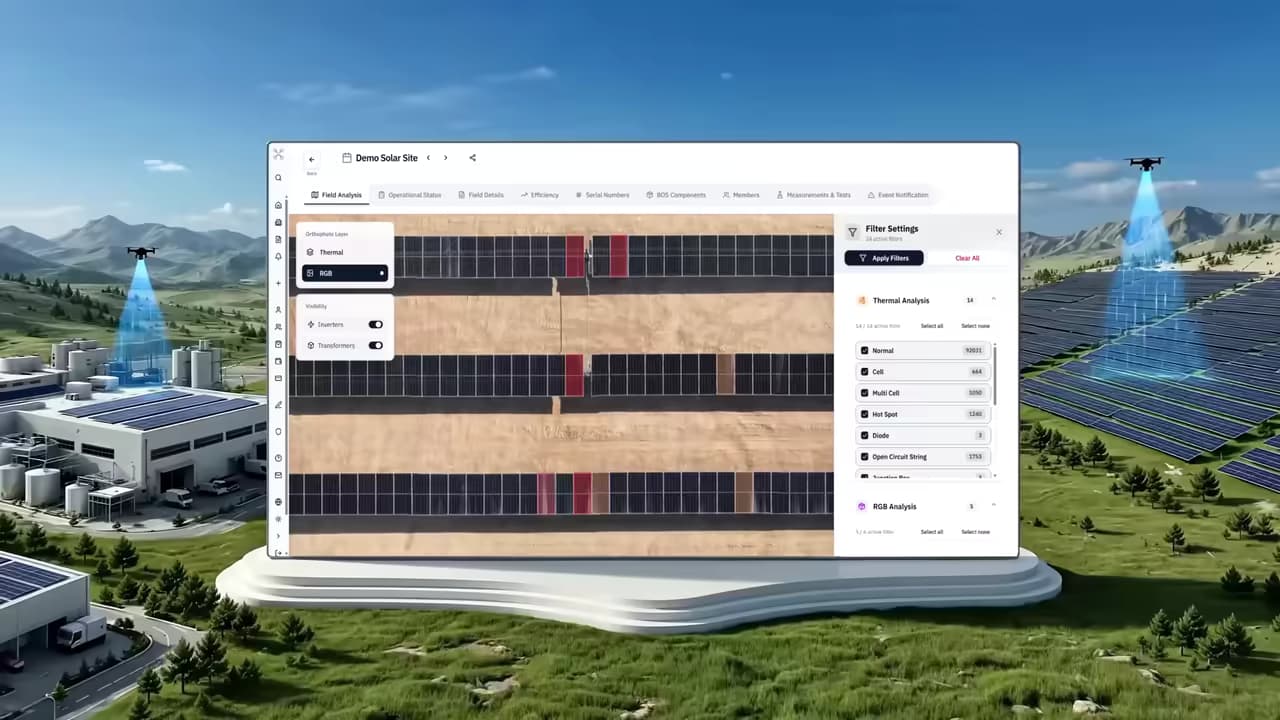
What an asset owner needs from an inspection
A finding is only useful if you can see it, trust it and hand it to someone who can act on it.
Owners rarely walk the rows. They commission an inspection and rely on the result to decide on repairs, claims and handover acceptance. A list of hotspots in a spreadsheet does not do that job. Each finding needs a module position, thermal and visual evidence, a classification and a date, so that the owner, the O&M contractor, the insurer or a manufacturer can review it without a second site visit. MapperX organizes the inspection data around that record.
Visibility, evidence and reports across the portfolio
Each item is something an owner can ask an inspection provider to deliver.
Module level defect visibility
AI analysis of thermal and RGB drone imagery flags anomaly candidates at module level, so a problem is not averaged away at string or block level.
Digital twin of the plant
Every finding is placed on the plant map, down to the row and module, so you can see where problems cluster and send crews to the right place.
Ranked by severity
Temperature analysis calculates the temperature difference (DeltaT) and ranks flagged panels by severity, which helps separate findings that need verification from those that can wait.
Reports for insurance, warranty and commissioning
MapperX supports reporting for insurance claims, warranty cases and commissioning handovers, all built from the same inspection record.
IEC 62446-3 thermography
Reports support outdoor PV thermographic inspection under IEC 62446-3, so the method, the conditions and the evidence are documented consistently.
Portfolio history
Plants, inspections, findings, serial numbers and reports stay organized for repeat surveys and long-term comparison across your portfolio.
From inspection order to owner report
What changes when the owner asks for the record, not only the result.
1. Commission the inspection
Agree plants, scope and acceptable acquisition conditions with your inspection provider. Ask for thermal and RGB imagery, because the visual record helps tell a physical defect from a thermal artifact.
2. Analyze the data
A compatible DJI thermal drone captures the imagery. MapperX analyzes it with AI at module level, detecting anomalies and classifying them.
3. Review on the digital twin
Findings appear on the plant map. The inspection team confirms or reclassifies them and decides which need electrical or field verification.
4. Receive the report
The report documents what was found, where and under which conditions, and can support insurance, warranty or commissioning files. Later campaigns are compared with this record.

Outdoor PV thermography
IEC 62446-3 is the technical specification for outdoor infrared thermography of photovoltaic modules and plants. MapperX supports reporting aligned with it.
What does an asset owner receive from a MapperX inspection?
A module level record of the findings: where each anomaly sits on the plant map, the thermal and RGB evidence, its classification and severity ranking, and a report that supports IEC 62446-3 outdoor thermography.
Can the report be used for insurance, warranty and commissioning?
MapperX supports reporting for insurance claims, warranty cases and commissioning handovers. Whether a claim is accepted is decided by the insurer or manufacturer, who may also ask for electrical measurements, serial numbers or installation records.
Does a thermal finding tell me how much energy I am losing?
Not by itself. A thermal image shows where a module behaves abnormally and how it ranks by severity. It does not state a production loss. Linking a finding to yield needs monitoring data and, where appropriate, electrical testing.
Does the plant have to be shut down for the inspection?
No. Thermal inspection is a passive, non-contact measurement taken from the air while the plant is producing, so an inspection may not need a shutdown window.
Who runs the inspection, and can I use MapperX myself?
Inspection teams, O&M companies and asset owners can all use the platform. An owner can commission an inspection company that works in MapperX or create an account and work with their own data. Plans are credit based and annual, see the pricing page.