Solar O&M Services
Solar O&M services for PV plants: inspection, preventive maintenance, fault verification, reporting and performance-focused maintenance workflows.
What Solar O&M Covers
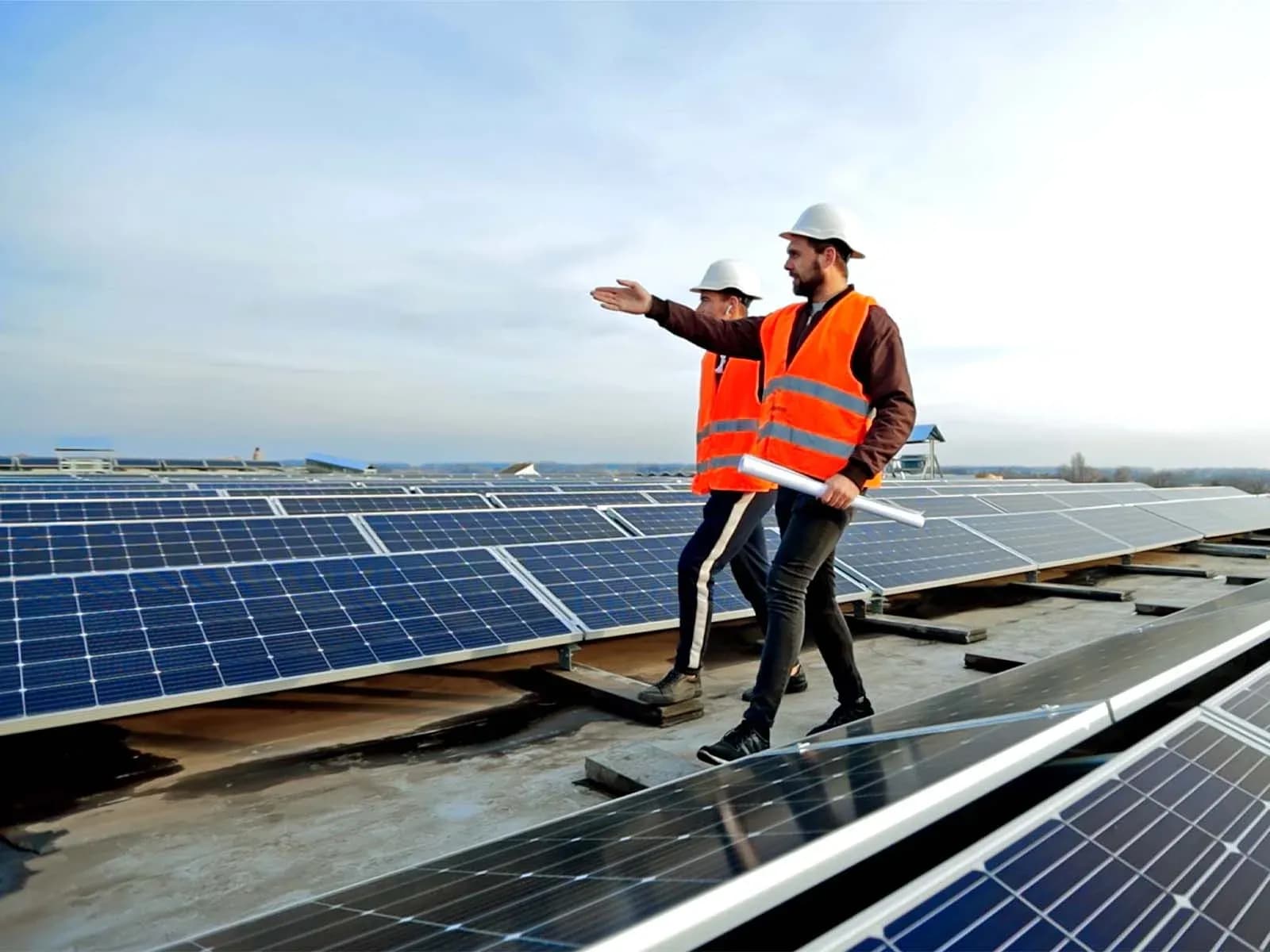
Solar operations and maintenance covers the work required to operate a PV plant, observe its condition, investigate abnormalities, plan corrective work, and preserve the records needed to understand how the plant changes over time. The exact scope depends on the plant, equipment, contracts, owner requirements, and operating model.
Operational work can include monitoring production, inverter status, alarms, communications, weather information, and other plant data. Maintenance can include planned inspections, cleaning where required, vegetation management, electrical testing, component repair, replacement, and investigation of events or performance deviations.
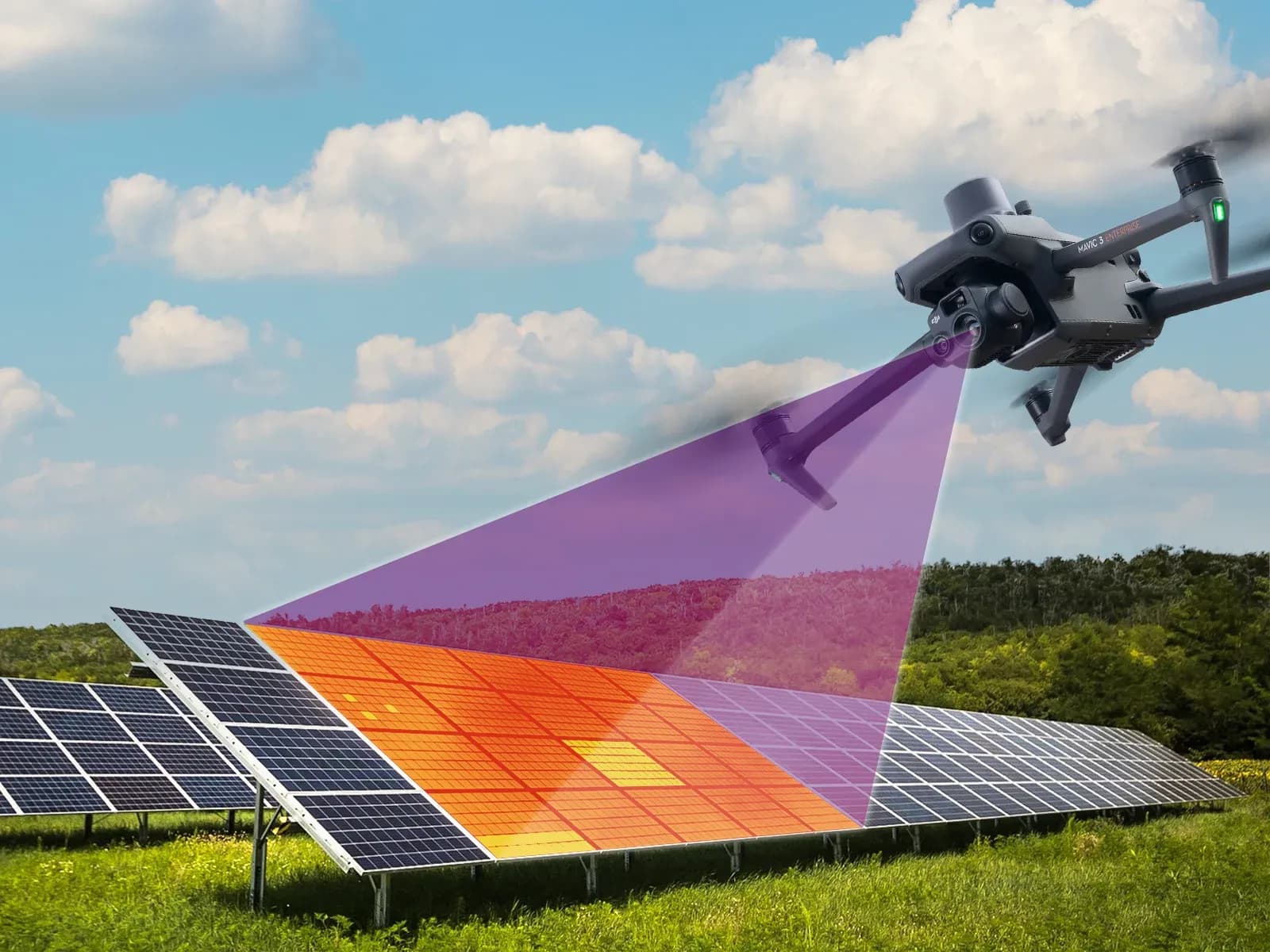
Inspection forms one part of that wider program. Visual inspection, aerial thermography, electrical measurements, functional tests, and equipment-specific checks answer different questions. They should be selected according to the condition being investigated rather than treated as interchangeable.
O&M should also include the process for deciding what happens after a finding. Identifying an unusual module or connector is only useful if the plant can assign priority, verify the condition, create a work order, record the intervention, and later confirm whether the issue was resolved.
Software can support these processes, but it does not perform all of O&M by itself.
Where Inspection Sits Inside an O&M Program
Inspection connects monitoring data with physical equipment. Monitoring may indicate that an inverter input or string behaves differently from comparable circuits, but it may not identify whether the cause is contamination, shading, a connector, a module, a fuse, a cable, or another condition.
A targeted inspection can narrow that uncertainty. Visible imagery can identify physical surface conditions, thermography can show temperature patterns, and electrical measurements can verify current, voltage, insulation, polarity, continuity, or another specific property.
Scheduled inspection also provides a baseline independent of alarms. Some conditions may not immediately produce a monitoring event, particularly when the affected component represents a small part of a large plant. Periodic inspection can reveal changes that aggregate plant data does not isolate clearly.
Event-driven inspection is another part of O&M. Hail, storms, electrical incidents, nearby construction, maintenance work, or unexpected production changes can justify inspection outside the planned calendar.
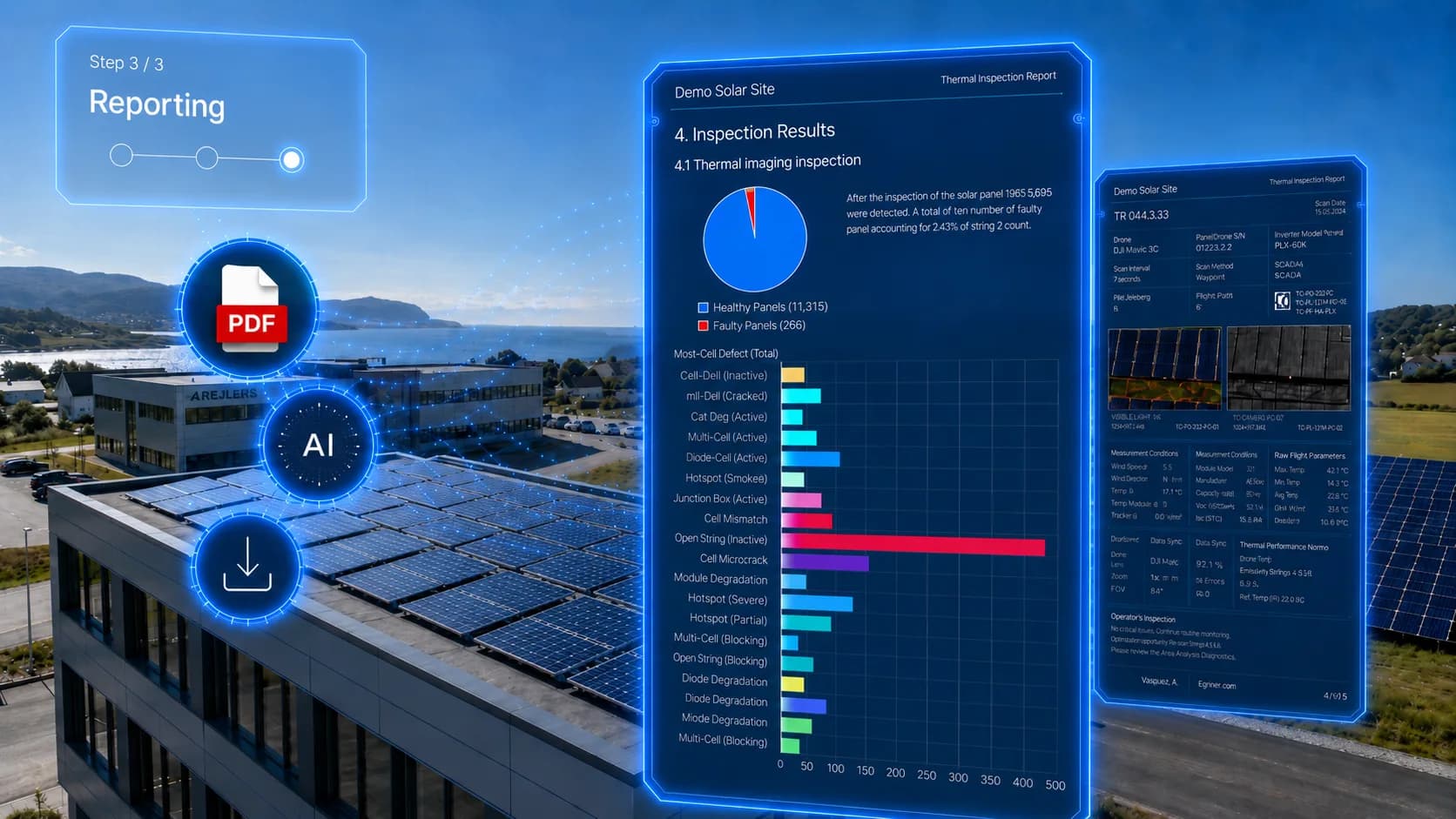
Inspection should therefore feed the maintenance process rather than exist as a separate report archive. Every finding needs a clear status: observation, verification required, corrective action planned, completed, or closed with supporting evidence.
What Module-Level Data Changes
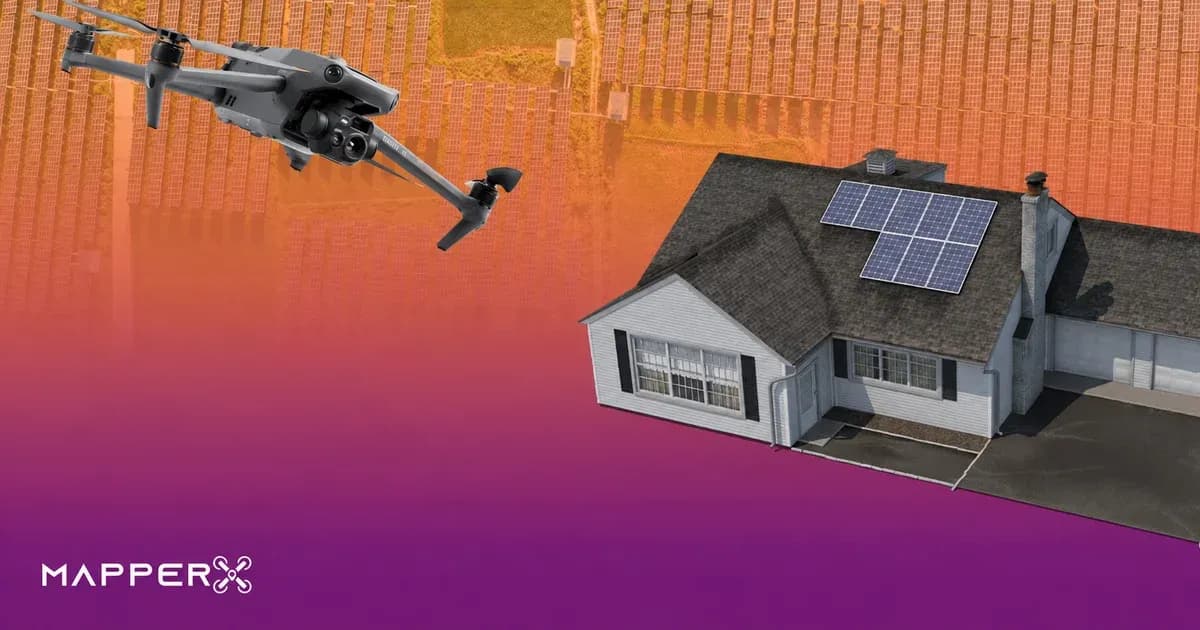
Module-level location data changes how precisely a plant can record defects and maintenance history. Instead of documenting that an issue occurred somewhere in a row or block, the record can connect thermal imagery, visible evidence, electrical measurements, and corrective work to a specific module position.
This improves repeat inspection. If the same location shows a thermal abnormality during several surveys, the team can distinguish a recurring issue from a newly observed condition. If the module was replaced or repaired, the later record can show whether the original finding remained or disappeared.
Module-level records also help identify repeated patterns. Several findings in the same row, equipment batch, connector type, or environmental area may justify a broader investigation, but the pattern should emerge from documented evidence rather than from assumptions about cause.
Trend information needs comparable conditions. A higher thermal value in a later survey may reflect different irradiance, wind, module temperature, or viewing geometry rather than deterioration. Historical records are most useful when inspection conditions remain available alongside the finding.
AI-assisted tools can help organize and filter module-level data, but candidate detection should remain separate from confirmation. Human review and, where necessary, electrical testing are still needed before a finding becomes a maintenance conclusion.
Corrective Work Planning and Prioritization
Not every finding requires the same response. A thermal observation, broken module, insulation alarm, communication fault, vegetation issue, or monitoring deviation can carry different consequences and require different skills, tools, and access arrangements.
Prioritization should begin with the available evidence. A condition associated with electrical safety or active equipment damage may require a different response from contamination that can be monitored until planned maintenance. The decision should account for plant design, operating state, consequence, and the confidence of the diagnosis.
Thermal severity should not be judged only from the color scale of an image. Irradiance, wind, module temperature, component type, loading, and comparison conditions influence what the image means. Electrical verification may be required before a repair is specified.
Planning also benefits from accurate location data. Technicians can arrive with the relevant module, connector, fuse, instrument, or replacement component when the work order identifies exactly which equipment needs attention.
After corrective work, the closure record should state what was changed and how the result was verified. That may involve an electrical retest, visual confirmation, repeat thermography, monitoring review, or another method appropriate to the original problem.
The objective is traceability from observation to confirmed resolution.
Warranty and Insurance Documentation
Inspection records can support warranty or insurance processes by documenting equipment condition, location, date, and the evidence available when a problem was identified. The usefulness of the record depends on its quality and on the requirements of the actual warranty, contract, or insurance policy.
A thermal image alone does not establish that a warranty claim is valid. The manufacturer or insurer may require electrical measurements, serial numbers, installation records, photographs, operating data, failure analysis, or other information. Those requirements must be taken from the relevant documentation.
Event-related records can be especially important. After hail, storms, fire, or another incident, preserving the affected location, visible condition, thermal observations, and subsequent testing can help distinguish event evidence from later maintenance changes.
The report should avoid assigning unsupported causes. A cracked module can be documented as cracked; whether the damage is covered by a warranty or insurance policy is a separate contractual question.
Inspection records also benefit from preserving environmental and operating conditions where they affect interpretation. This is particularly important for thermography, where two images taken under different conditions may not be directly comparable.
O&M documentation can therefore support a claim process, but it cannot determine contractual coverage on its own.
Commissioning, Handover and Baseline Records
Commissioning establishes a starting condition for the plant before or as it enters normal operation. Electrical measurements, functional tests, equipment verification, configuration records, and other acceptance activities can create the baseline against which later changes are evaluated.
Thermographic inspection may be included where appropriate, but it does not replace electrical commissioning. IEC 62446-3 concerns outdoor thermographic inspection of operating PV systems, including equipment, environmental conditions, procedure, personnel competence, and reporting. It does not provide a complete commissioning process for every electrical property of the plant.
Handover records should identify what was actually inspected or measured. A simple statement that a plant was "checked" has limited value if it does not show which strings, modules, equipment, circuits, or functions were included.
Module-level baseline information can make later O&M more precise. A future finding can be compared with the condition documented near commissioning rather than evaluated without historical context.
Baseline thermal images should still be interpreted cautiously. Environmental conditions, electrical loading, camera geometry, and module temperature affect comparison, and IEC 62446-3 does not impose one universal temperature range for every installation.
A useful handover record therefore preserves both the plant condition and the conditions under which that condition was measured.
Limits
Software does not replace an O&M program. It can organize monitoring data, inspection records, module locations, findings, work orders, and historical evidence, but maintenance still requires competent personnel, procedures, electrical tests, physical access, and plant-specific decisions.
Thermal records also have defined limits. A hotspot or other thermal pattern may identify where investigation is needed, but it does not prove root cause or create a warranty claim by itself. Electrical and physical verification may still be necessary.
One inspection is not continuous monitoring. Conditions may change after the survey, and intermittent faults may not be present when the plant is inspected. Monitoring and event-driven investigation remain relevant between planned inspections.
O&M documentation should not be used to imply guaranteed production, fixed maintenance savings, or a specific extension of equipment life. Results depend on plant condition, operating environment, maintenance quality, equipment design, and the corrective actions actually performed.