
PV Plant Functional Tests
PV plant functional tests check whether specified components, controls and protective functions behave as intended under an agreed test plan.
What PV Functional Tests Are
PV functional tests verify that defined equipment and control functions behave as intended when the plant is commissioned, returned to service, modified, or investigated after a fault. Unlike a measurement that records only voltage or current, a functional test checks whether a device or system responds correctly to a command, condition, or simulated event.
The exact test scope depends on the plant design. A small installation may have relatively simple inverter and monitoring functions, while a larger plant may include multiple protection devices, communications systems, plant controllers, remote commands, emergency functions, and alarm interfaces. The test plan should therefore come from the actual system architecture and commissioning requirements.
Functional testing is evidence that the tested function operated correctly under the conditions of the test. It is not a guarantee that the plant will remain fault-free in every future operating state.
The strongest procedures define the input, expected response, observed response, and acceptance criterion before the test begins.
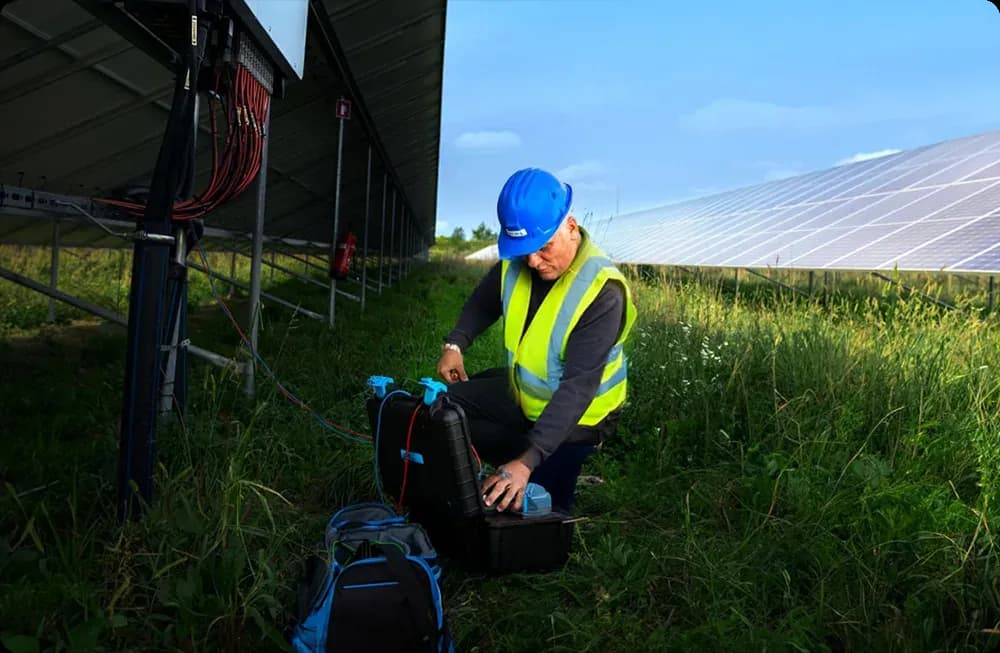
What Functional Testing Covers
Inverter start and stop behavior is a common part of functional testing. The team may verify that the inverter starts when the required conditions are present, stops when commanded or when relevant conditions are removed, and returns to the expected state afterward. The exact sequence should follow the equipment documentation and system design.
Protection and alarm functions may also be tested where the installation allows them to be verified safely. This can include confirming that specified alarms appear when a defined condition occurs and that relevant protective or control functions produce the expected response. A displayed alarm should be checked against the actual event rather than assumed to prove that the complete protective chain is working.
Monitoring functions are another important area. Measurements, device status, alarms, communication links, timestamps, and plant identifiers should be checked to confirm that field information reaches the monitoring system correctly. A sensor value that appears on a screen is not sufficient if the signal is mapped to the wrong device or unit.
Emergency stop or emergency shutdown functions may be included where the plant design provides them. Testing should confirm the intended response without creating an uncontrolled operating condition. The required behavior depends on the plant architecture and should be defined in the project documentation.
Why They Matter
During commissioning, functional tests help show that installed equipment behaves according to the intended control and operating sequence. Equipment can be wired correctly and still have configuration, communication, mapping, or logic problems that are not visible during a static inspection. Functional testing exposes those issues by requiring the system to respond.
Tests are also useful after repair or replacement. If an inverter, monitoring gateway, protective device, controller, or communication component has been changed, the affected functions should be checked before the work is considered complete. Repeating only a visual inspection may miss a configuration or integration problem introduced during maintenance.
After a fault or plant incident, functional tests can verify that the affected control and alarm functions have been restored. The scope should follow the event. An inverter communication failure does not necessarily justify retesting every unrelated plant function, while a major electrical intervention may require broader verification.
Functional testing also supports operational safety because operators depend on status indications, alarms, switching functions, and emergency responses. However, passing functional tests alone does not prove that the plant is electrically safe. Insulation, earthing, protective continuity, component condition, and other safety-related aspects may require separate inspection and measurement.
Preparation and Safety
The test plan should identify each function, the equipment involved, the required plant state, the expected response, and any conditions that make the test unsafe or invalid. Drawings, control narratives, inverter documentation, protection settings, alarm lists, and monitoring architecture may all be needed before testing begins.
Personnel should understand which circuits remain energized during the test. PV arrays can supply DC power whenever sufficient light is present, and stopping an inverter does not necessarily de-energize incoming PV circuits. Functional testing should therefore be coordinated with the site's electrical safety and isolation procedures.
Tests that intentionally create alarm or trip conditions should be planned so that the plant is not placed into an uncontrolled state. Remote operators or monitoring personnel may need to be informed if the test will generate real alarms or communication events. Temporary overrides should be documented and removed after testing.
Test equipment and interfaces should also be suitable for the system. A communication command, simulated sensor input, physical switch operation, or electrical test should be performed using the method intended for that equipment.
The safest procedure is usually the one that tests only the required function while disturbing as little of the operating system as possible.
Interpreting Results and Records
Each test record should state what function was tested, the initial condition, the action performed, the expected result, and the observed result. A simple pass or fail without the underlying observation is less useful because it does not show what the equipment actually did.
Timing can matter for some functions. If the system is expected to change state after a defined sequence or delay, that behavior should be recorded in accordance with the test procedure. The report should avoid inventing acceptance times that are not supported by design or manufacturer information.
The equipment identifier, software or firmware context where relevant, test date, personnel, and plant operating condition should also be recorded. If a test could not be completed because of weather, access, unavailable communications, or another limitation, the report should state that explicitly.
Unexpected behavior should be separated from root-cause diagnosis. For example, "alarm did not appear in the monitoring interface after the defined test condition" is a valid finding. Declaring that the communication gateway has failed requires additional evidence.
Functional records become particularly valuable after future maintenance because they show what behavior was previously verified.
Frequency and Triggers
Functional tests are commonly associated with commissioning and return-to-service activities, but they can also be triggered during operation. Equipment replacement, firmware or configuration changes, control-system modifications, communication work, protective-device changes, and fault recovery can all justify targeted retesting.
There is no single universal interval for every functional test in every PV plant. Some functions may be checked according to maintenance procedures, contractual requirements, manufacturer instructions, or operating history. Others may be tested only after a relevant intervention or abnormal event.
The useful question is whether the function could have changed since it was last verified. A software configuration change may justify retesting control and monitoring behavior even if no electrical hardware was replaced. Mechanical work on the array may have no reason to trigger unrelated SCADA tests unless the work affected the relevant system.
Monitoring data can also reveal reasons for functional verification. Repeated missing alarms, incorrect device states, communication gaps, or unexplained control behavior may justify a focused test.
Frequency should therefore follow plant evidence and maintenance needs rather than a generic calendar copied across unrelated sites.
Limits
Functional testing verifies defined behavior under defined test conditions. It does not guarantee energy production, plant availability, financial performance, inverter efficiency, or future fault-free operation. A system can pass a functional test and still contain problems outside the scope of the tested function.
It also does not, by itself, prove overall electrical safety. Protective conductor continuity, insulation resistance, polarity, earthing, component condition, and other electrical checks may need to be performed separately. The functional test should not be used as a substitute for those measurements.
Likewise, correct inverter start and stop behavior does not confirm that every module, string, connector, or combiner box is free from defects. Monitoring functionality does not prove that every sensor is accurate unless the measurement chain has been checked.
Thermography may be used as an additional inspection method when thermal condition is relevant. IEC 62446-3 covers outdoor thermographic inspection of operating PV systems, including equipment, environmental conditions, procedure, personnel competence, and reporting. It does not prescribe functional-test logic, act as a software algorithm, or impose one temperature threshold for every plant.