
Aerial Thermography for Solar PV Inspection
Aerial thermography screens operating solar PV arrays for abnormal patterns. Learn its scope, reporting requirements, diagnostic limits and maintenance uses.
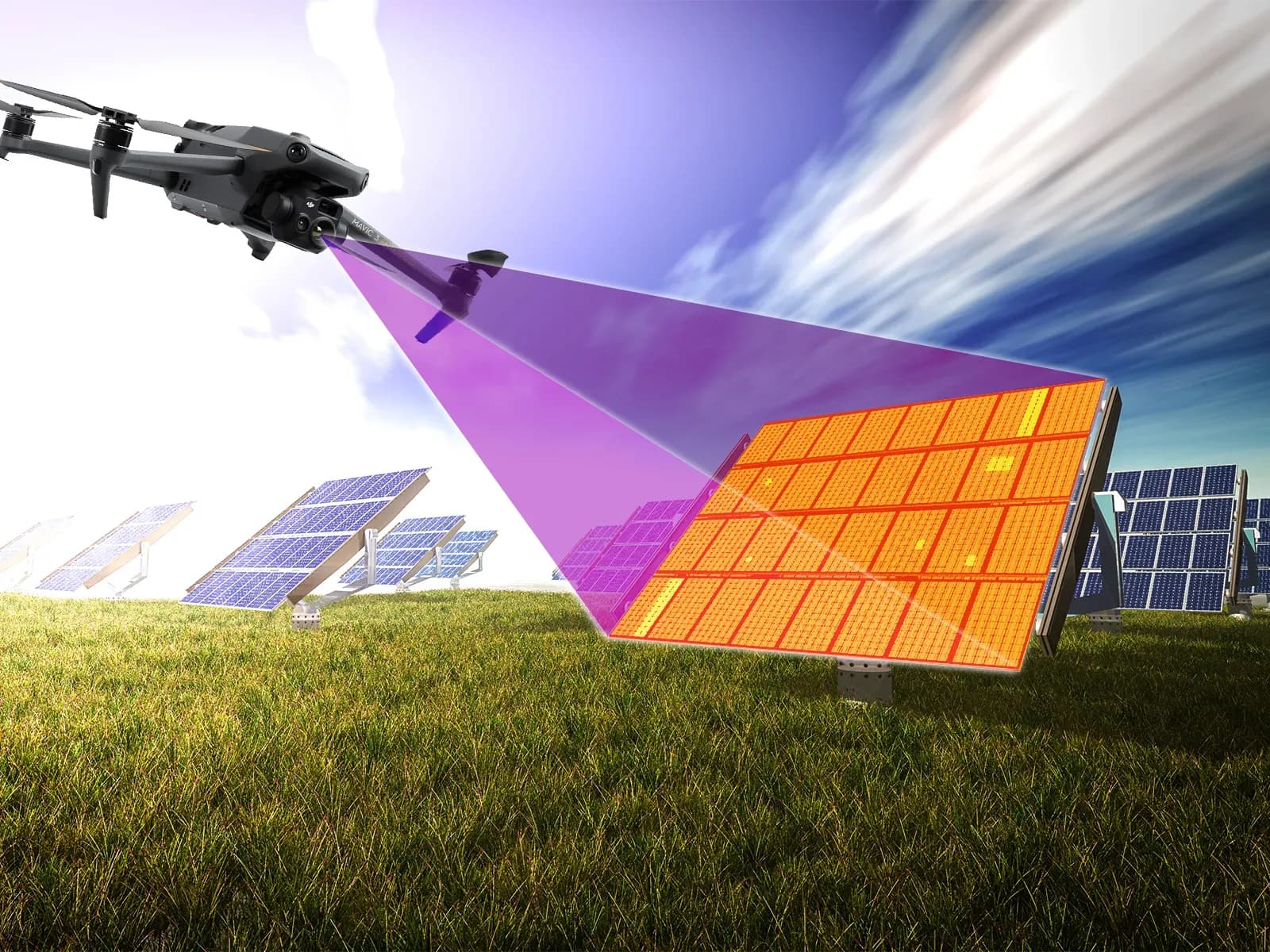
Aerial thermography uses an aircraft-mounted infrared camera to map apparent surface-temperature patterns. In solar PV inspection, it screens operating modules for unusual behavior and helps locate areas for investigation. It does not directly measure electrical power, heat flow through a panel or the cause of every anomaly.
As drone technology continues to expand, so does the range of solutions available to its users. Aerial thermal surveys are proof that the technology is growing and becoming increasingly affordable.
How Aerial Thermography Is Used in Solar Inspection
Drone thermography complements, rather than eliminates, visual inspection, performance monitoring and electrical tests.
Thermal and visual images together help reviewers identify candidate problems and plan ground checks. Visible fouling or shading may explain a pattern, but aerial observations do not remove the need to confirm unclear or safety-relevant findings on site.
What is Infrared Thermography?
Infrared thermography detects radiation from surfaces and uses measurement settings to estimate apparent temperature. The detail available on each cell depends on the detector, optics, working distance, focus and viewing geometry; using a particular drone does not guarantee cell-level measurements.
Patterns and Suspected Conditions in Aerial Thermography
An inspection may reveal patterns associated with the conditions below. These are investigation categories, not proof that thermal imagery alone can distinguish every cause. Paired visual evidence and targeted tests are needed where the interpretation is uncertain.
- Localized cell heating requiring investigation.
- Possible module connection or operating-state problems.
- Visible panel damage associated with a thermal pattern; cracks may need other imaging methods.
- Possible bypass-diode, substring or solder-connection problems.
- Suspected delamination requiring close visual or specialist assessment.
- String-level patterns to compare with electrical operating data.
- Apparent anomalies caused by reflections or image artifacts, which must be excluded before diagnosis.
Module warranties differ by manufacturer, product and installation conditions. A power-output warranty is not a promise of a fixed conversion efficiency, and a thermal anomaly alone does not establish a warranty breach. Retain the applicable warranty terms and verification evidence alongside the inspection record.
Relating Thermal Findings to Production Loss
- Production impact depends on the fault, array configuration and operating conditions; temperature contrast is not a direct energy-loss measurement.
- Use electrical tests and comparable plant monitoring data to estimate loss rather than applying a universal percentage to thermal anomalies.
Air Thermography with MapperX
MapperX uses AI-assisted, human-reviewed analysis to organize aerial inspection evidence into mapped findings for maintenance review. Results depend on conditions, acquisition quality and validation. Define the inspection scope, required detail and reporting format before scheduling; site size alone does not establish how long acquisition and analysis will take.
All data collected and analyzed is compiled into a report that helps solar power plant owners to better understand where to direct crews for critical repairs.
Our reports show anomalies categorized from major to minor, which gives a clear overview of the different faults found and how common they may be.
Use mapped findings to direct technicians to the relevant assets and document the suspected cause. Confirm the location and diagnosis before repair; the report should distinguish measured observations from interpretations.
Normal operating-array thermography is performed while the plant generates electricity. The flight itself generally does not require shutdown, but access restrictions, follow-up tests and repairs must be coordinated with the site’s safety procedures.
Solar Panel Thermal Review
Evaluate the survey by whether it produces actionable findings, adequate coverage and traceable evidence. Financial benefit depends on the defects found, the corrective work and site-specific energy value; it should not be assumed from the presence of a thermal report.
The use of UAVs during inspections on solar panels can provide useful results when acquisition conditions and validation are appropriate. It also allows us to cover more area while maintaining a safe operating position in accordance with site procedures. A thermal imaging scan can help locate panels requiring investigation among the many that may be present.
For example, a localized hot area may indicate a stressed cell or another condition requiring investigation. Persistent overheating can be associated with damage, but a single image does not establish the failure mechanism or remaining lifetime. Timely diagnosis and corrective action, not imaging alone, support reliable operation.
After thermographic inspection in solar power plants, we will prepare and provide you with a complete world-class report detailing all our data and recommendations.
Define the Scope Before Ordering an Aerial Survey
Specify whether you need rapid screening, module-level mapping or evidence for a particular investigation. Agree which surfaces and equipment are included. An overhead module survey should not silently imply that concealed connectors, module backs and enclosed electrical equipment have been inspected.
The IEC 62446-3 catalog scope concerns outdoor infrared inspection of PV modules and plants in operation, including equipment, environmental conditions and reporting. It is not a certificate for a drone or an automatic approval of a report. The actual inspection method and records must support any stated conformity.
Ask the provider how it identifies inaccessible areas, separates reflections from persistent patterns and links each finding to original thermal and visual files. Use the thermal drone inspection mistakes guide to prepare questions about acquisition quality. Preserve coverage gaps and uncertain findings so future inspections can address them rather than assuming a clean bill of health.
Frequently asked questions
Does aerial thermography measure a solar plant’s efficiency?
No. It records thermal behavior under the conditions of the flight. Electrical production and efficiency require the appropriate electrical and solar-resource measurements; thermal imagery helps explain where further investigation may be useful.
Can a thermal inspection report prove a warranty claim?
It can provide supporting evidence, but acceptance depends on the applicable warranty and the manufacturer’s verification process. Keep module identification, original imagery, acquisition conditions and follow-up test results.