
Monocrystalline vs Polycrystalline Solar Panels
Monocrystalline vs polycrystalline solar panels compared by efficiency, appearance, space use, temperature behavior and practical project considerations.
How the Two Technologies Differ
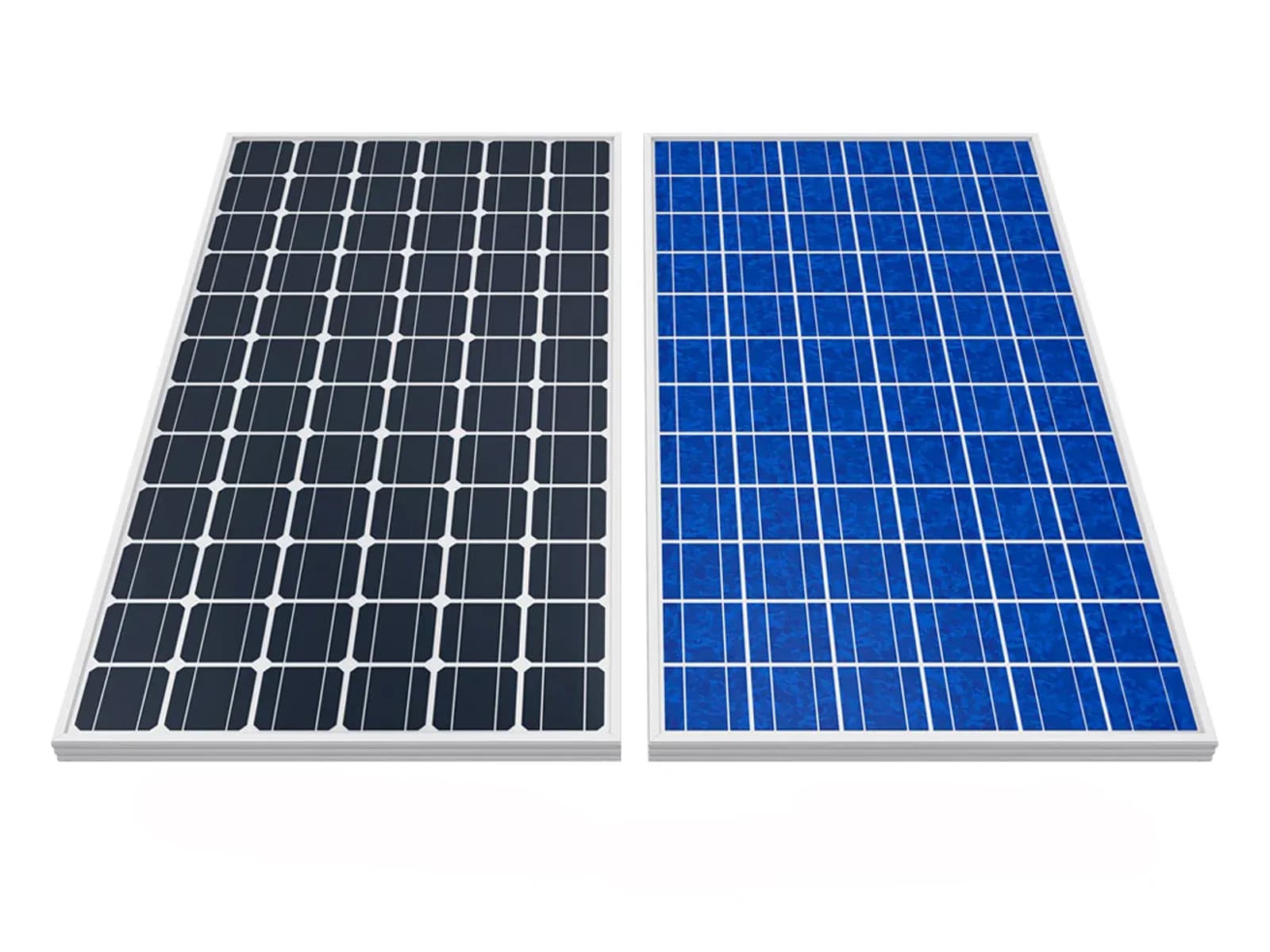
Monocrystalline and polycrystalline PV modules are both based on crystalline silicon, but the silicon material is formed differently. Monocrystalline cells are produced from material with a more uniform crystal structure, while traditional polycrystalline cells contain multiple crystal grains within the silicon material.
These manufacturing differences have historically affected cell appearance, manufacturing processes, electrical characteristics, and the amount of module area required for a given nameplate output. They should not be turned into a universal statement that one module type is always the correct choice for every project.
Module technology has also evolved over time. Cell architecture, wafer design, interconnection methods, module format, encapsulation, backsheets or glass construction, and manufacturing quality can matter as much as the broad monocrystalline or polycrystalline label.
For project decisions, the complete module datasheet and field requirements are more useful than technology category alone. Nameplate power, dimensions, electrical characteristics, temperature coefficients, mechanical ratings, degradation terms, product documentation, and compatibility with the rest of the system should be compared together.
A newer monocrystalline module and an older polycrystalline module may differ in many design details beyond crystal structure. Those differences should not all be attributed to the mono-versus-poly distinction.
Comparing Offers on Paper vs on Site
Module offers should be compared under the same stated test conditions. Nameplate power or efficiency values are meaningful only when the conditions and measurement basis are understood. Comparing values from different assumptions can create a false impression of technical superiority.
Temperature coefficient is particularly relevant because module voltage and power behavior change with cell temperature. A module with one set of nominal characteristics at standardized conditions may behave differently in a hot operating environment from another design with different temperature coefficients.
Power tolerance should also be reviewed. The tolerance tells the buyer how the delivered module's measured nameplate result may vary relative to its stated rating under the manufacturer's defined conditions. It should not be confused with long-term energy yield.
Warranty terms require direct review of the actual documentation. Product warranty, performance-related terms, exclusions, installation requirements, transfer conditions, and claim procedures can differ between manufacturers and product generations. No general article can state that one crystalline technology always carries better warranty protection.
Physical dimensions and electrical values should be compared with the intended inverter and mounting system. A higher-power module may also be larger or have different current characteristics, so the project should evaluate the complete system rather than simply ranking products by watts per module.
On-site suitability ultimately depends on the actual plant design and environment.
Field Performance Depends on Conditions
PV output depends on irradiance, module temperature, shading, soiling, orientation, electrical configuration, and equipment condition. These factors affect both monocrystalline and polycrystalline systems, even though individual module designs respond differently.
Temperature is particularly important for crystalline-silicon modules. At comparable irradiance, higher cell temperature generally reduces voltage and available power. The magnitude of that effect should be taken from the specific module's documented temperature coefficients rather than from a generic assumption about crystal type.
Shading can affect either technology. The consequence depends on cell layout, bypass-diode arrangement, string topology, inverter architecture, and where the shadow falls. A technology label alone does not describe how a complete system responds to partial shading.
Soiling is similarly site-dependent. Dust, pollen, bird contamination, agricultural residue, or other deposits affect the amount and distribution of light reaching the cells. Module tilt, cleaning practices, rainfall, and local environment may have more operational significance than whether the cells are mono or poly.
Field comparisons should therefore be made under comparable operating conditions. Comparing production from different plants without accounting for orientation, weather, inverter design, aging, soiling, and electrical configuration cannot isolate the effect of cell technology.
Mixing Module Types in One String
Mixing different module types within the same string requires careful electrical review. Series-connected modules carry the same string current, so differences in current characteristics can constrain how the combined string operates. Voltage characteristics and temperature behavior also affect compatibility with the inverter's operating window.
Even modules that appear similar by nameplate power may have different open-circuit voltage, operating voltage, short-circuit current, maximum-power current, temperature coefficients, dimensions, connector types, or mechanical characteristics. These differences should be checked before modules are combined.
Replacing one damaged module in an older array can therefore be more complicated than finding another panel with the same nominal wattage. The replacement should be assessed for electrical compatibility with the remaining string and for physical compatibility with the mounting and connectors.
Manufacturer documentation and warranty terms may also affect replacement decisions. Using a different product, connector, or configuration can have implications that need to be checked against the actual equipment documents rather than assumed from general technology similarity.
Where different module groups need to coexist, system architecture may provide better options than forcing unlike products into one series string. The correct approach depends on inverter inputs, MPPT arrangement, string design, and the characteristics of the available modules.
Electrical compatibility should be demonstrated, not inferred from both products being crystalline silicon.
Maintenance and Inspection for Both Types
Both monocrystalline and polycrystalline modules require condition-based maintenance and inspection. Glass, frames, junction boxes, connectors, cabling, mounting, contamination, vegetation, shading, and electrical behavior can all change during plant operation regardless of cell crystal type.
Monitoring data can identify strings or inverter inputs that differ from comparable parts of the array. Visual inspection can document broken glass, contamination, physical damage, or shading, while electrical tests can examine current, voltage, insulation, polarity, continuity, or IV behavior where relevant.
Aerial thermography can also be used on operating arrays. IEC 62446-3 addresses outdoor thermographic inspection of operating PV systems, including equipment, environmental conditions, procedure, personnel competence, and reporting. It does not prescribe one universal temperature range for all module types or plants.
Thermal images can show localized cell heating, broader module patterns, connector heating, or differences between strings. They do not prove root cause by themselves, and the interpretation should account for irradiance, wind, cloud conditions, module temperature, reflections, and viewing angle.
Inspection requirements should therefore follow equipment condition and plant behavior rather than the mono or poly label. A well-performing older polycrystalline system does not become defective merely because newer module technologies exist.
Choosing by Project Priorities, Not Technology Marketing
The module decision should start with project requirements. Available area, target system size, inverter characteristics, mounting system, electrical current and voltage limits, climate, installation method, supply availability, maintenance strategy, and replacement planning can all affect the choice.
Where land or roof area is constrained, module power density may carry more weight. On a site with abundant space, other factors such as electrical compatibility, mechanical design, procurement, long-term availability, or maintenance may matter more.
Project teams should compare specific products rather than treating all monocrystalline modules as one category and all polycrystalline modules as another. Two modules using the same broad cell technology can still differ significantly in electrical parameters, construction, dimensions, temperature behavior, and documentation.
Supply and replacement strategy can also matter for a long-lived plant. A module that fits the initial design well but is difficult to replace later may create different maintenance considerations from one belonging to a widely supported product family. That question is project- and supplier-specific.
Technology marketing often reduces the decision to a single headline metric. Engineering selection should instead compare the parameters that affect the actual design and operating environment.
There is no need to declare a universal winner between mono and poly to make a sound project decision.
Limits
A working polycrystalline module should not normally be replaced simply because a newer monocrystalline product exists. Replacement should be justified by condition, electrical compatibility, plant objectives, maintenance needs, or another documented project requirement.
Changing modules in an operating string can introduce compatibility issues. Different voltage, current, size, connector, mechanical, or temperature characteristics may create more complexity than the replacement solves.
A higher nameplate efficiency also does not automatically establish a favorable retrofit. Removing functioning modules, changing electrical configuration, labor, new equipment, remaining component life, plant downtime, and other project factors would need to be considered before any financial conclusion could be made.
For the same reason, a fixed payback period should not be claimed from the technology label alone. Energy prices, production profile, installation cost, existing equipment condition, financing, system design, and replacement scope all affect the result.
Thermal or visual inspection cannot determine that a module should be replaced solely because another technology performs differently on paper. The existing module's electrical and physical condition must be assessed on its own evidence.
The useful comparison is therefore between specific modules and specific project needs. Monocrystalline and polycrystalline describe part of the cell technology; they do not replace engineering review of the complete PV system.