AI Solar Panel Fault Detection Software
AI solar panel fault detection software: analyze thermal and visual inspection data, map candidate anomalies and support PV inspection review and reporting.
Core Principles of AI Based Fault Detection
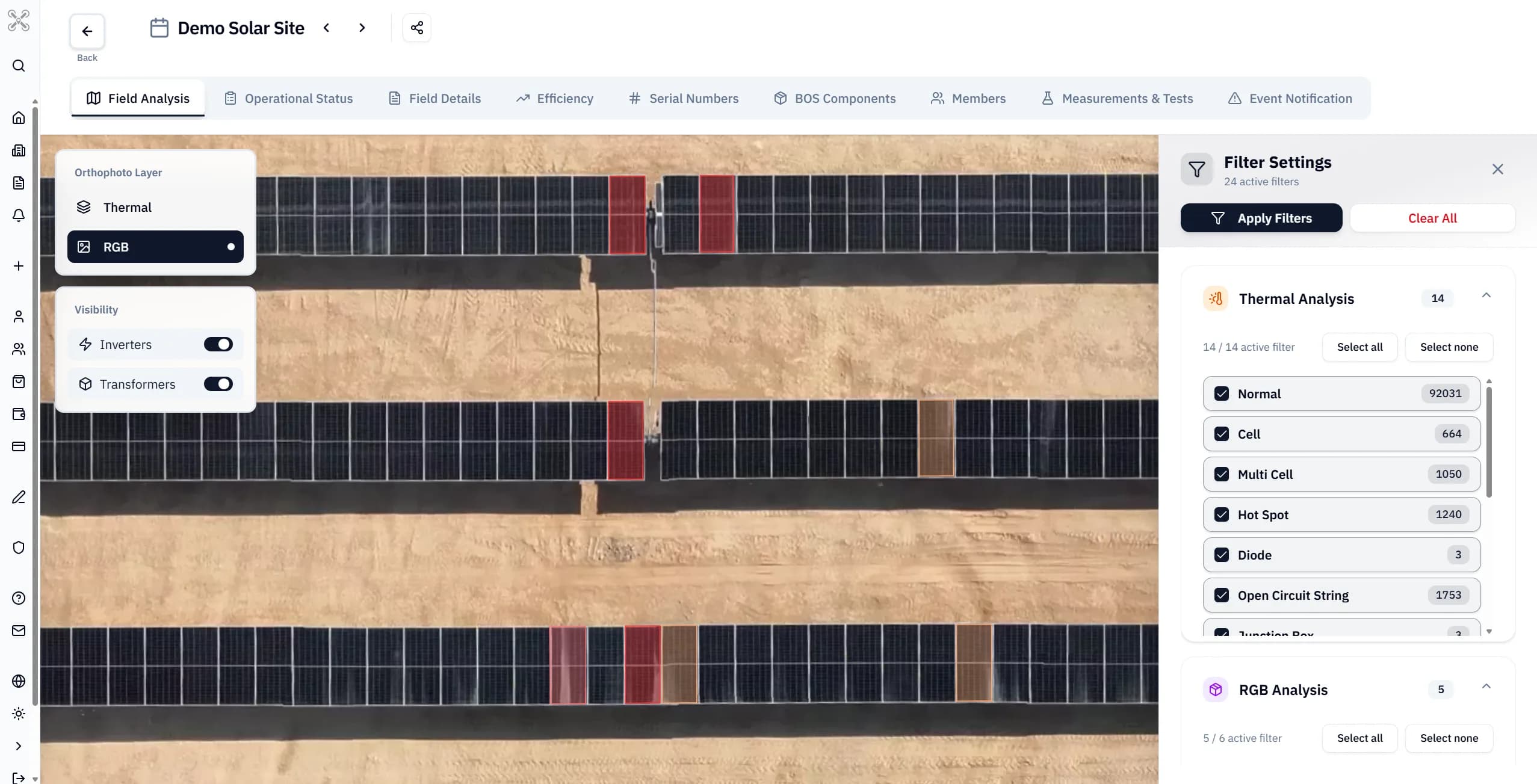
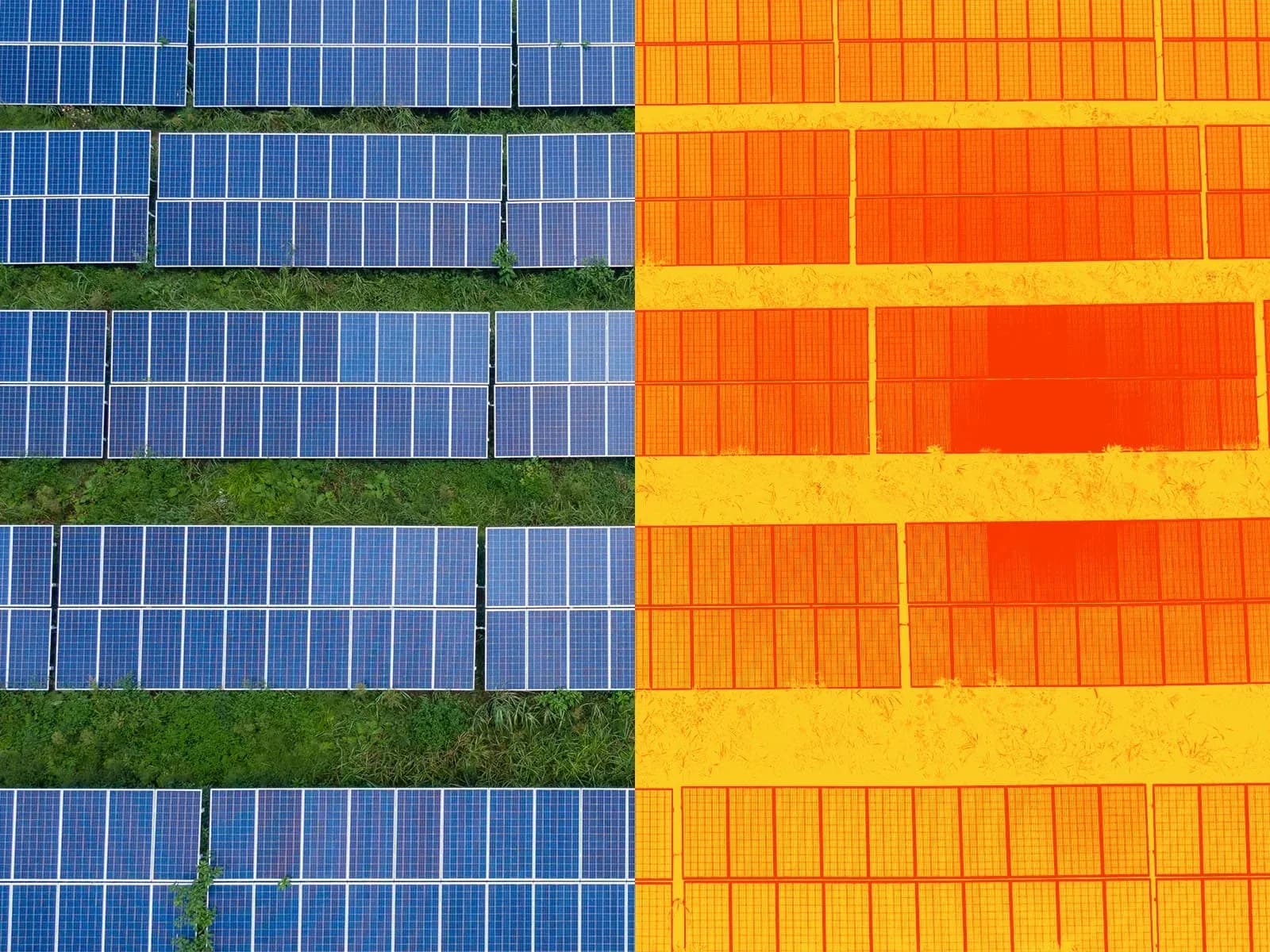
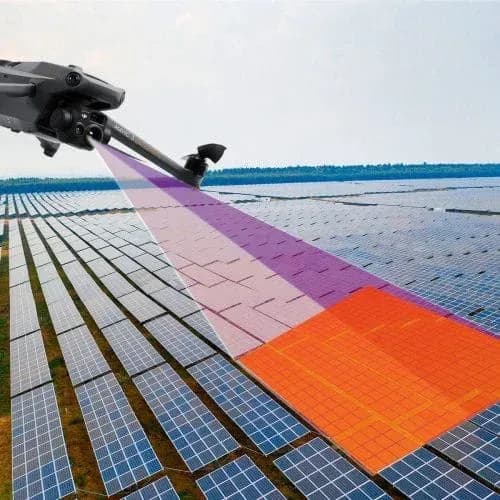
AI solar panel fault detection software reviews thermal and visual images to flag candidate anomalies for an engineer. It can accelerate repetitive screening, but an image does not directly measure circuit behavior. IEC 62446-3 covers outdoor PV thermography; its catalog scope does not define or certify an AI detection model.
- Uses temperature signature learning models
- Detects irregular thermal clusters on modules
- Correlates ΔT with electrical behavior trends
- Identifies abnormal shading patterns
- Flags unusual hotspot development
- Supports predictive maintenance workflows
Operational Workflow of AI Powered Fault Detection
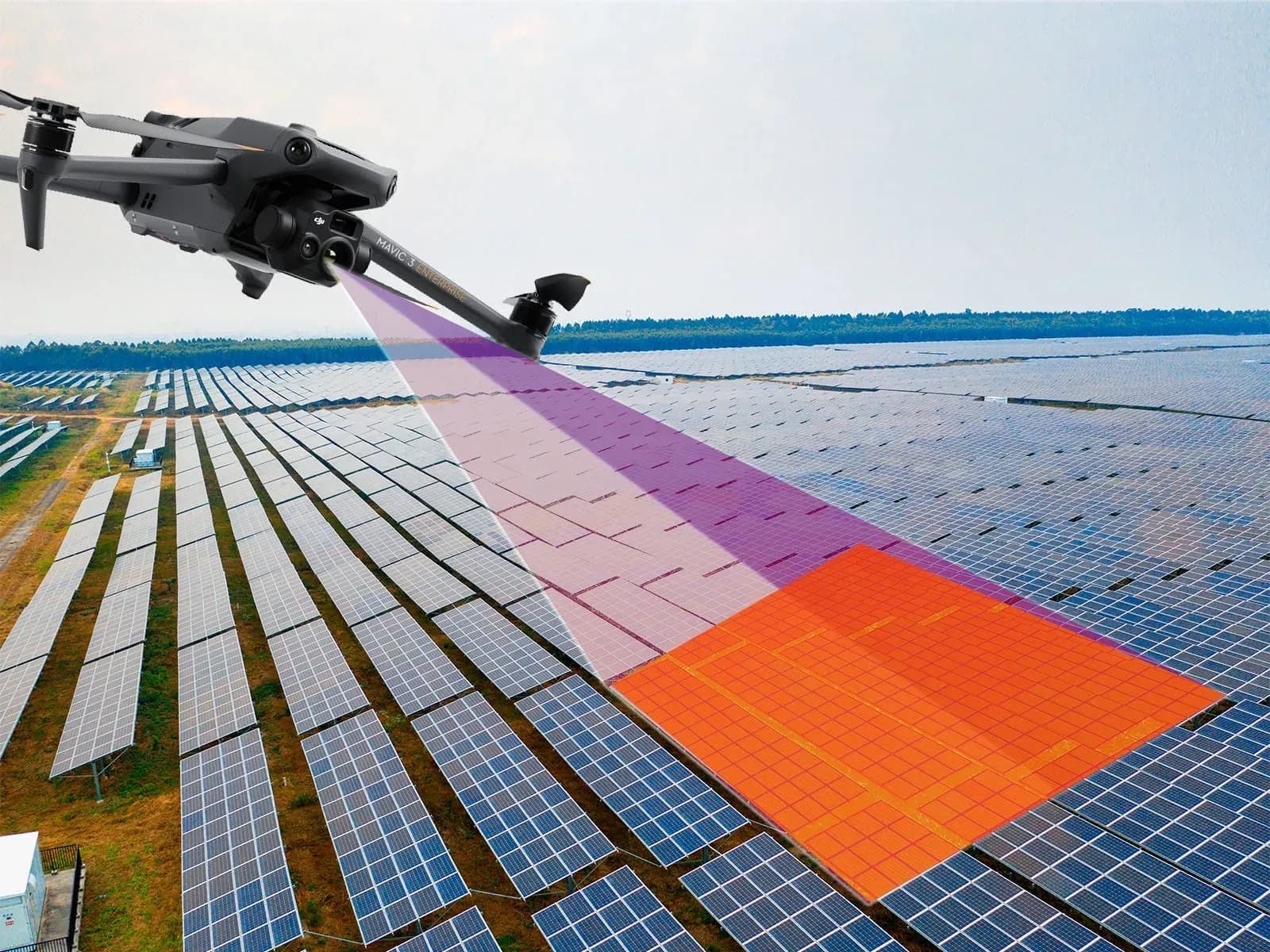
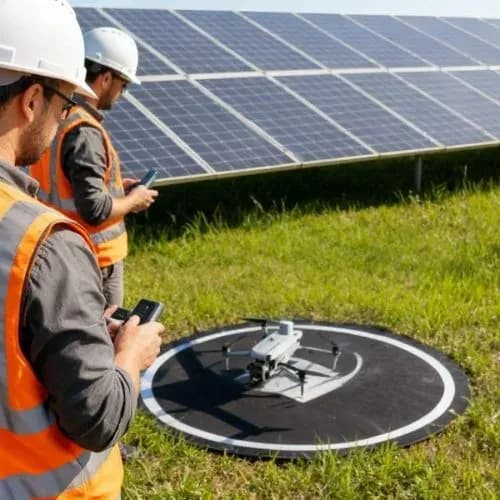
Reliable analysis starts with usable thermal files, clear visual images and recorded acquisition conditions. Review irradiance, wind, cloud changes, viewing angle and camera settings against the agreed inspection procedure. Software checks can identify missing inputs; they cannot make unsuitable imagery diagnostic.
- Records plane-of-array irradiance during acquisition
- Reviews wind and changing environmental conditions
- Flags cloud transitions that affect comparability
- Monitors sensor calibration and NETD requirements
- Selects a viewing angle that limits reflections
- Documents temperature corrections and their assumptions
How Can AI Support Solar Fault Detection Accuracy?
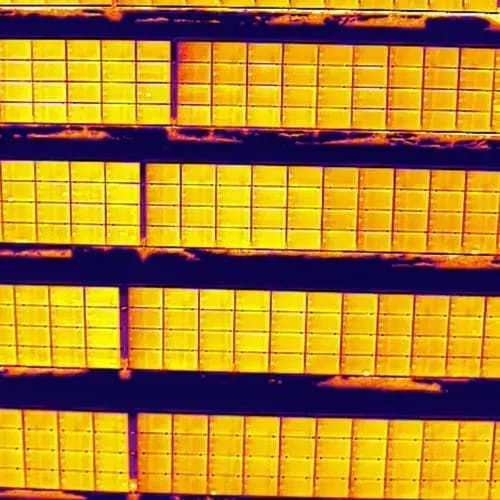
AI can apply consistent screening criteria to large image collections. Its usefulness depends on image quality, the represented module types and the reviewer’s ability to challenge a label. Repeat inspections may reveal changes, but neither a single thermal image nor a model score establishes when a module will fail.
- Highlights thermal detail resolved by the available sensor
- Flags patterns for review before deciding whether a cell is failing
- Highlights trends in panel mismatch
- Flags visible heated connections for safe field checks
- Flags possible diode-related patterns for verification
- Supports consistent thermal labeling subject to review
MapperX Integration for Automated AI Diagnostics
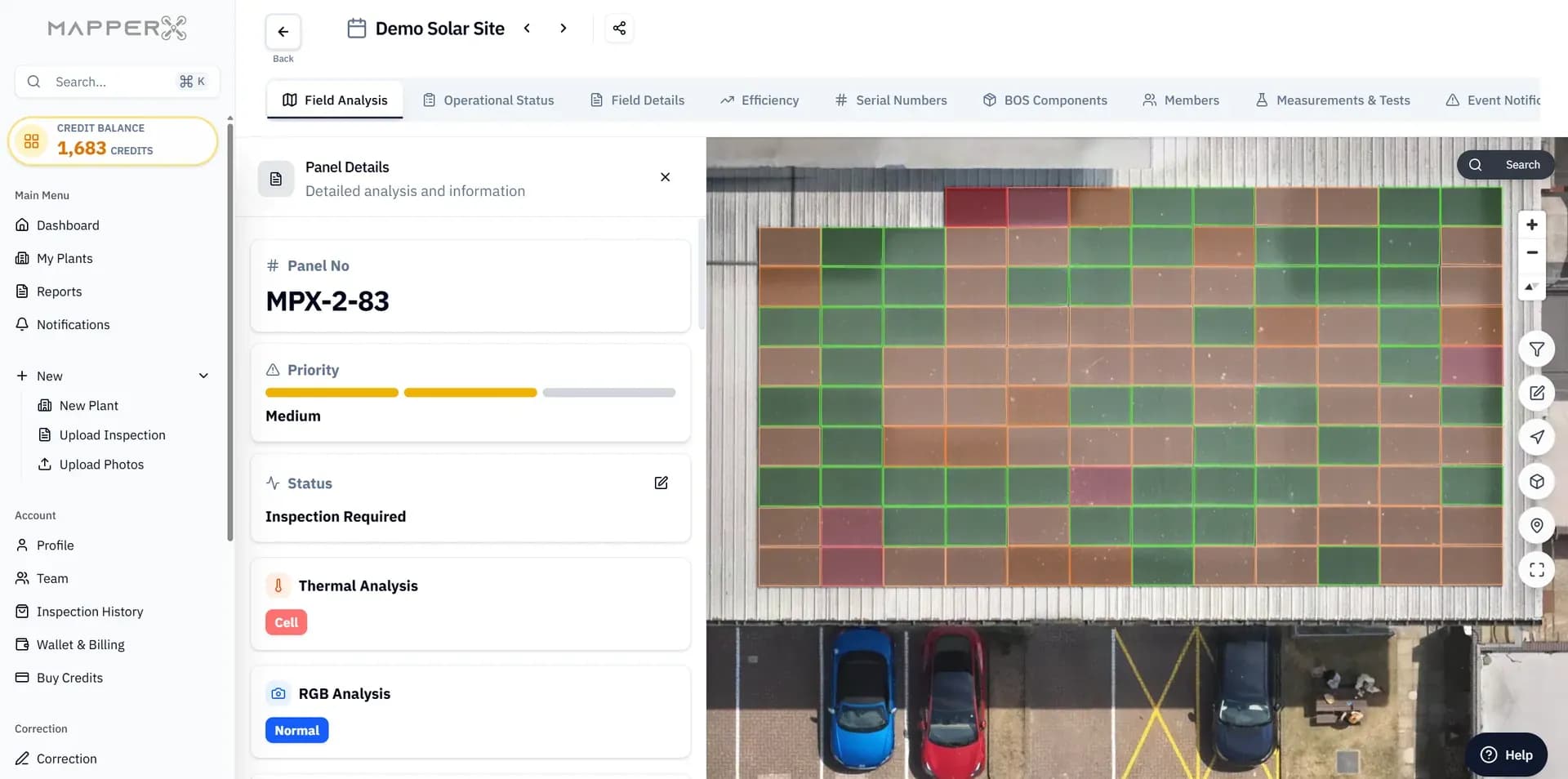
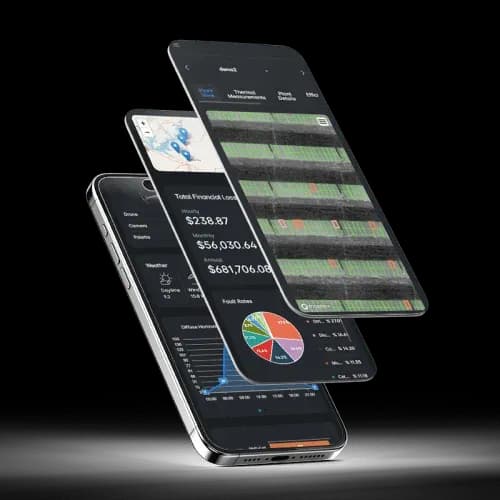
MapperX organizes thermal findings and their locations for review and reporting. Treat each label as an interpretation of the available evidence. The report should explain its classification method, measurement assumptions and any excluded areas rather than imply that automated processing alone establishes compliance.
- Records emissivity assumptions appropriate to the measured surface
- Uses documented review and maintenance-priority categories
- Anchors faults with GPS coordinates
- Compares findings with previous inspection cycles
- Produces multilingual and standardized reports
Professional Users of AI Based Fault Detection
AI driven diagnostic tools are used by professionals responsible for maintaining solar plant reliability. Different technical roles rely on these insights to assess performance, reduce losses and support long term operational planning.
- O&M engineers maintaining system health
- EPC teams verifying installation quality
- Thermography experts validating ΔT anomalies
- Asset managers reviewing risk indicators
- Inspectors evaluating warranty claims
- Investors monitoring overall plant reliability
Application Areas Across Solar Installations
AI screening can support utility-scale and rooftop inspections, but site geometry, module design and climate affect acquisition and interpretation. Validate representative images from each new operating context instead of assuming a model transfers unchanged to every installation.
- Utility scale PV farms
- Industrial rooftop systems
- Commercial solar arrays
- Off grid photovoltaic installations
- Microgrid and hybrid solar environments
- Large distributed solar fields
Solar Panel Inspection Process - Step by Step with MapperX
- Fly Your Drone: Plan a compatible thermal/RGB flight and check a sample dataset.
- Make a Fast and Secure Payment: Confirm the selected service and payment conditions.
- Upload Your Photos: Upload the original image files with location and acquisition details.
- Receive Your Report in Just a Few Clicks: Review the mapped findings and report; assign any required field verification.
Generate your reports in supported languages.
The interface and PDF outputs are available in Turkish, English, German, French, Spanish, Chinese, Japanese, Portuguese, Bahasa Indonesia, Italian, and Dutch.
AI solar panel fault detection analyzes thermal or visual inspection data to flag patterns that may indicate abnormal PV behavior. The strongest use of AI is to accelerate review and organize large datasets; a detected pattern should remain linked to the source image, asset location and inspection conditions so a reviewer can validate it.
Where AI Helps in Solar Panel Inspection
AI is useful for repetitive image review, candidate anomaly detection, prioritization and consistent labeling across large PV datasets. It is less reliable when acquisition quality is poor or when the requested conclusion requires electrical measurements that are not present in the image data.
How to Evaluate AI Findings Before Issuing Work Orders
Start with a representative sample containing apparently normal modules as well as candidate anomalies. Compare the software output with an engineer’s review of the original thermal and RGB files. Review both false positives, where a normal condition is flagged, and false negatives, where a relevant anomaly is missed. An overall accuracy percentage without the sample definition or defect mix is not a useful purchasing criterion.
For a suspected hot spot, check whether the pattern persists in another usable frame, whether visible shade or debris explains it, and whether the location matches the correct module. Keep the original label, reviewer decision and reason for any change. Escalate credible safety concerns through the site’s established procedure rather than waiting for automated severity scoring.
Choose follow-up measurements according to the question. I-V curve tracing can investigate electrical underperformance; a field visual check may resolve soiling or visible damage. Compare later surveys only when module identity, operating state and acquisition conditions are sufficiently consistent. This produces a defensible inspection history without promising that AI predicts every future failure.
Frequently Asked Questions
Does AI require perfect weather conditions to detect faults?
Not perfect weather, but suitable and sufficiently stable acquisition conditions. A reviewer should assess the recorded conditions and identify any limitations before interpreting the output.
Can AI identify electrical issues directly?
No. Thermal imagery may suggest an electrical problem, but current, voltage or other field measurements are needed when the electrical cause must be established.
How does AI differentiate normal heating from anomalies?
By comparing ΔT patterns with model based reference behavior.
Is MapperX required for AI based inspections?
No. MapperX is one way to organize AI-assisted inspection data. The quality of an inspection depends on acquisition, analysis and technical review, not on using a particular brand.
Can the software work with any drone type?
Not automatically. Confirm the exact camera model, thermal file format, metadata and processing support with a sample dataset before the survey. Thermal and GPS capability alone do not establish compatibility.
Can AI determine the exact cause of every PV anomaly?
No. AI can classify patterns in available data, but some root causes require electrical tests, visual evidence or field inspection.
How should AI detection accuracy be evaluated?
Use a representative, independently reviewed dataset and report missed anomalies and false alarms separately. Define the defect classes, image quality and unit of assessment, such as module or image, before comparing scores.
Should every AI label become a maintenance work order?
No. Review the evidence and confidence in the finding first. A work order should identify the asset, observed condition, required verification and responsible team; a tentative image label is not a confirmed diagnosis.