
Thermal Inspection of a 462 kW Rooftop Solar Plant
Drone-based thermal and RGB inspection of a rooftop photovoltaic plant in Kaštel Sućurac, Croatia, covering 1,089 half-cut modules to identify thermal anomalies and support performance assessment and maintenance prioritization.
Hakan Yaralı · Technical Manager
Project at a Glance
- Plant capacity
- 462 kWp
- Modules inspected
- 1,089
- Inspection area
- ~0.265 ha
- Data captured
- Thermal + RGB
- Inspection duration
- 1 field day
- Suspected anomalies
- 370
- Location
- Kaštel Sućurac, Croatia
- Inspection date
- 2026-08
- Inspection standard
- IEC 62446-3 Compliant Thermographic Inspection
Project Context
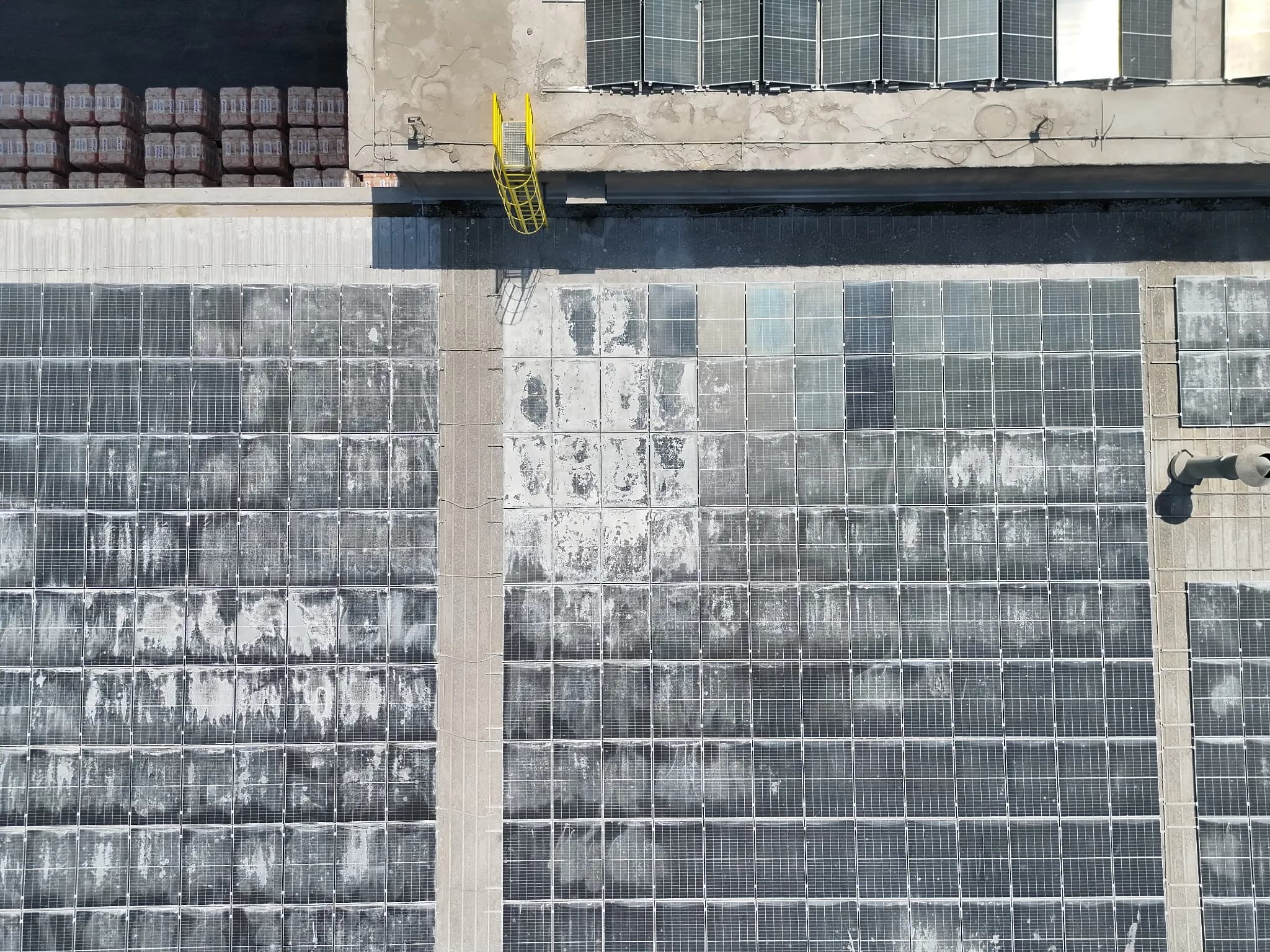
The rooftop solar plant in Kaštel Sućurac, Croatia showed extensive surface contamination across a significant portion of the PV modules. This heavy soiling created unfavorable operating conditions and was associated with localized heating across affected areas, making contamination a key factor in both plant performance and maintenance planning. Drone-based thermal and RGB inspection revealed a high occurrence of hotspots and cell faults, particularly on modules affected by visible contamination. By evaluating thermal anomalies together with RGB evidence, the inspection helped identify the most affected modules, assess their impact on energy production, and prioritize cleaning and maintenance activities based on operational and financial impact.
Inspection Scope
What was inspected
- Thermal and RGB imagery across the entire rooftop photovoltaic array
- 1,089 half-cut Trina Varius photovoltaic modules
- Assessment of heavy surface contamination and soiling intensity across the inspected modules
- AI-assisted anomaly screening at module level
- Detection and classification of hotspot and cell anomalies, particularly in areas affected by visible contamination
- Cross-assessment of thermal findings with RGB observations to evaluate the relationship between soiling and localized heating
- Technical review of identified anomalies
- Prioritization based on estimated operational, efficiency, and financial impact
Methodology
- 1
Pre-flight planning
Flight altitude was defined to achieve a 3 cm/pixel GSD in accordance with IEC 62446-3 requirements, while overlap and flight route were planned according to the plant layout.
- 2
RGB and thermal data acquisition
Thermal and RGB imagery was captured across the inspected photovoltaic array.
- 3
Image quality control and alignment
Coverage and thermal image integrity were checked and imagery was georeferenced for analysis.
- 4
AI-assisted anomaly screening
Thermal patterns were detected, grouped and mapped to individual photovoltaic modules.
- 5
Technical review
Detected findings were reviewed and classified according to their thermal characteristics.
- 6
Reporting and verification plan
Prioritized findings were delivered to the client together with efficiency and loss-impact assessments to support subsequent maintenance activities.
Findings
| Finding | Detected pattern | Possible cause | Verification | Status |
|---|---|---|---|---|
| Hotspot | A localized area reaches an abnormally high temperature compared with its surroundings. | Cell damage, microcracks, physical defects, shading, contamination, or other conditions that cause abnormal localized heating. | Thermal measurement and visual inspection: reported; further field verification may be required. | Pending |
| Cell Fault | A PV cell loses normal function, causing localized heating and reduced performance. | Manufacturing defects, microcracks, physical damage, or deterioration of the affected cell. | Thermal measurement and visual inspection: reported; further field verification may be required. | Pending |
| Multicell Fault | Multiple PV cells within the same module lose normal function, causing wider performance and power loss. | Manufacturing defects, thermal stress, or physical damage affecting multiple cells within the module. | Thermal measurement and visual inspection: reported; further field verification may be required. | Pending |
Thermal Evidence
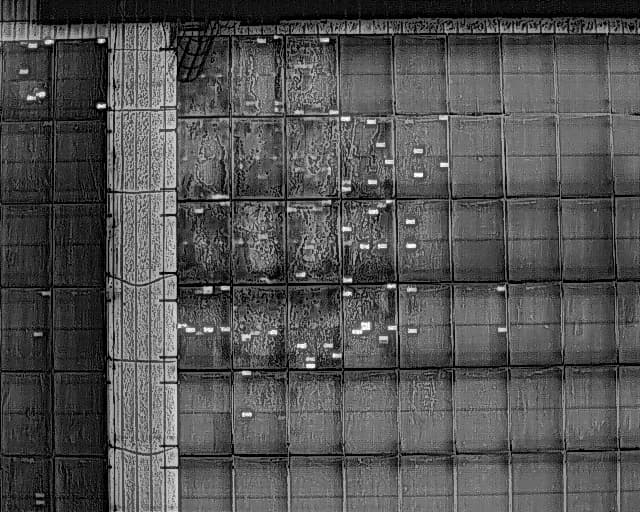
Thermal image
RGB image
Actions and Outcome
- A total of 370 anomalous modules were identified and reported to the client. This comprises 268 hotspot findings and 122 cell faults, 390 findings in all; 20 modules show both, so the findings affect 370 distinct modules.
- The highest concentration of hotspot and cell anomalies was observed on modules with heavy surface contamination, indicating that severe soiling was a key condition affecting thermal performance across the site.
- Modules with more intensive contamination showed stronger localized heating and a higher occurrence of thermal anomalies, making these areas a priority for cleaning and maintenance.
- The additional efficiency loss and estimated financial impact associated with the affected modules were calculated to support maintenance prioritization.
- Findings were prioritized according to their estimated impact on plant efficiency, energy production, and financial loss, helping the client focus corrective actions on the most affected areas first.
Limitations
Thermal imagery can identify temperature patterns requiring investigation, but it does not independently confirm every electrical or mechanical root cause. Irradiance, wind, reflections, shading, soiling, flight conditions and equipment configuration may affect interpretation.
Other case studies
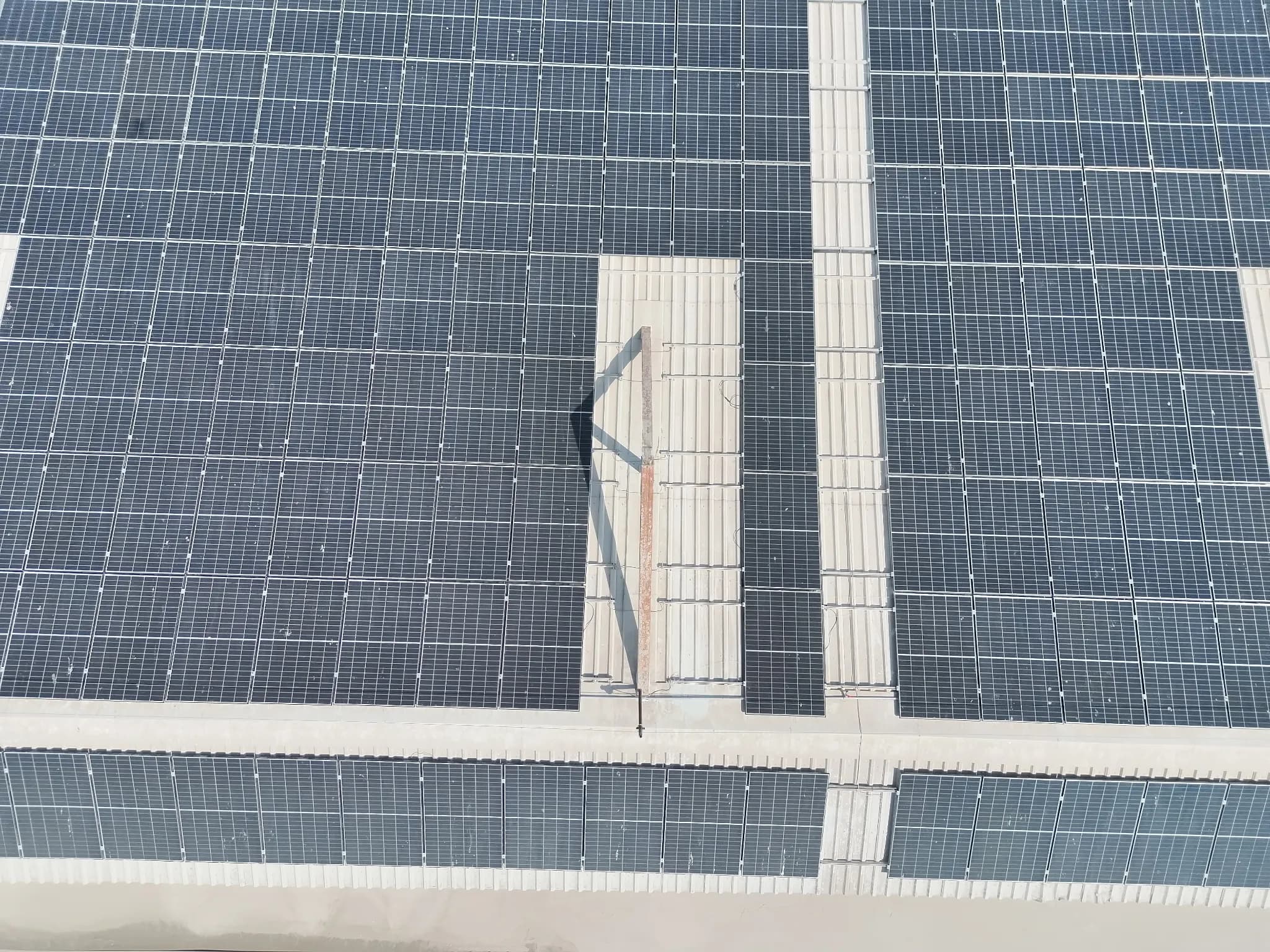
Thermal Inspection of a 745 kW Photovoltaic Plant
Drone-based thermal and RGB inspection of the photovoltaic plant in Kaštel Sućurac, Croatia, covering 1,755 modules to identify thermal anomalies associated with external shading and support performance assessment and maintenance prioritization.
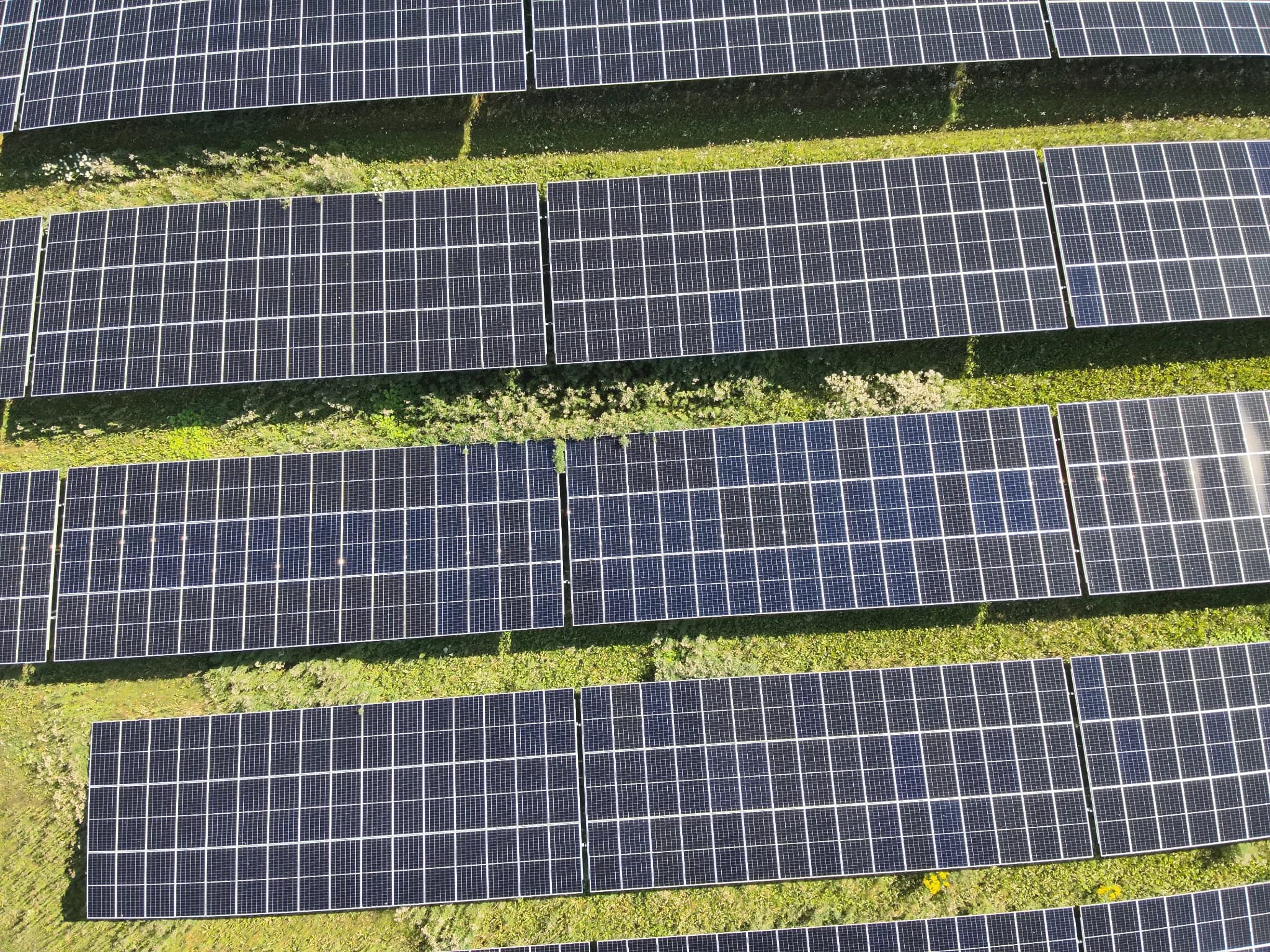
Thermal Inspection of a 30.54 MW Ground-Mounted Solar Plant
Drone-based RGB and thermal inspection of the solar plant in Borgdorf-Seedorf, Germany, covering 47,448 photovoltaic modules to identify and assess suspected thermal anomalies requiring maintenance attention.
Planning a photovoltaic inspection?
Share your plant capacity, module count and inspection objective to receive a proposed inspection scope.
Request an Inspection Scope