
Solar Panel Installation in Agricultural Areas
Solar panel installation in agricultural areas: why sites are considered for PV, positioning and layout, module and mounting selection, and operating cost.
Why Agricultural Sites Are Considered for PV
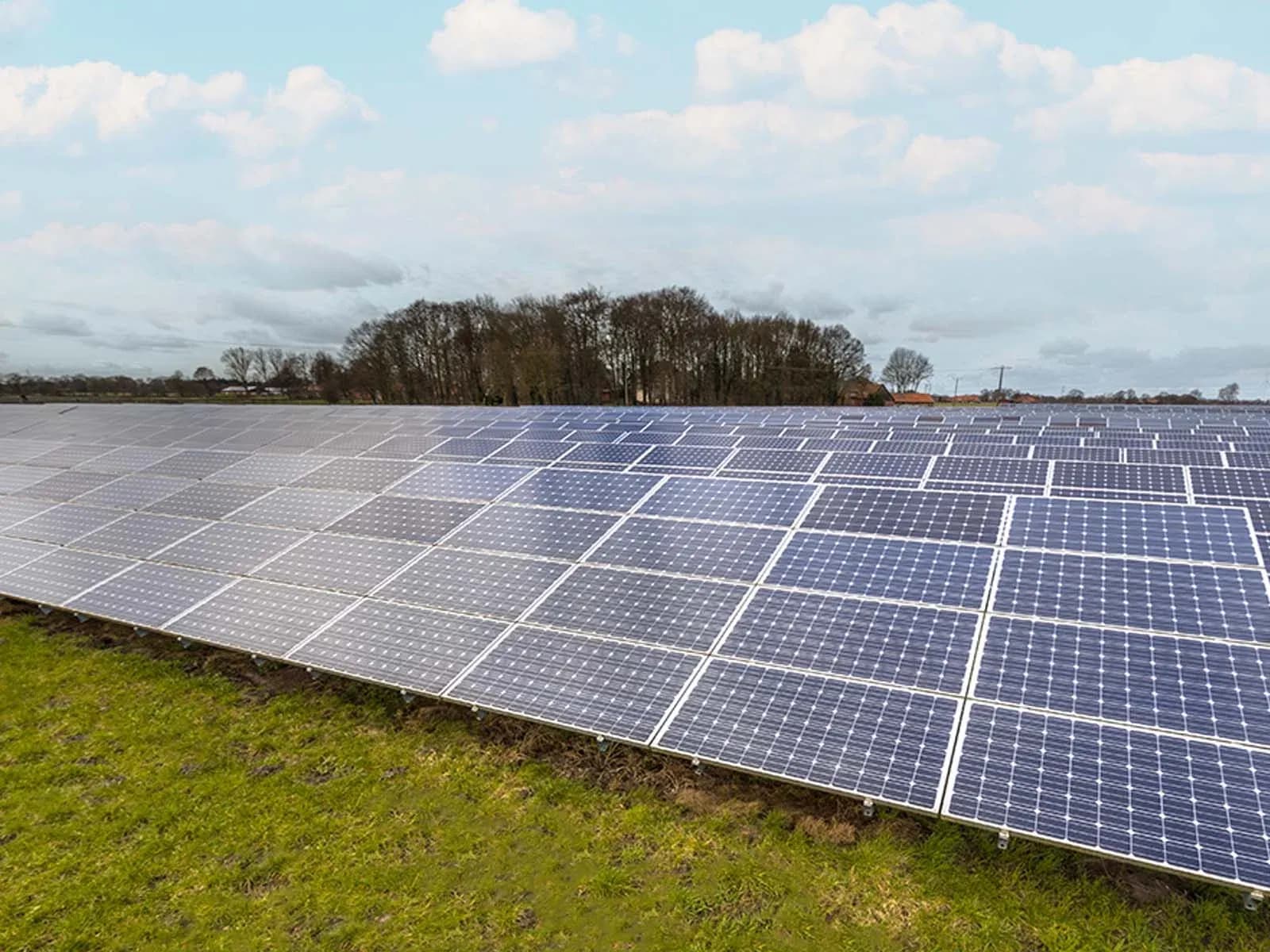
Agricultural land can offer large, open areas with good solar exposure, but the decision to install PV should begin with how the land is already used. A field that appears suitable from an aerial view may be needed for irrigation routes, machinery access, drainage, livestock movement, seasonal cropping, or future expansion. The energy project and the agricultural operation have to be considered together.
Available solar resource is only one part of the decision. Terrain, soil conditions, access roads, electrical connection points, flooding risk, dust sources, and nearby trees or structures can influence whether a particular part of the site is practical for modules. A technically usable area is not automatically the best place if it interferes with routine farm operations.
The business should also decide whether the installation will replace an agricultural use or coexist with it. Agrivoltaic arrangements can combine electricity generation with farming activity, but they require more detailed planning of height, spacing, crop access, light distribution, and maintenance. The term should not be used to imply that every PV system on agricultural land provides a productive dual use.
Local land-use, grid, planning, environmental, and agricultural requirements also need to be checked for the actual project location. These conditions are jurisdiction-specific and should not be inferred from a general article.
Positioning and Layout Decisions
Shading should be evaluated across the expected operating year rather than from a single site visit. Trees, buildings, terrain, silos, utility structures, and adjacent rows can reduce irradiance on parts of the array. The effect depends on module orientation, row spacing, mounting geometry, and the time of day and season.
Ground slope affects both construction and operation. Uneven terrain can change row-to-row shading, drainage, access, and structural design. It can also make mowing, cleaning, inspection, and component replacement more difficult if maintenance routes are not planned before installation.
Irrigation infrastructure is another practical constraint. Pipes, channels, pumps, valves, service roads, and moving irrigation equipment need enough clearance to remain usable. Placing modules where routine irrigation work becomes difficult can create recurring operational problems even if the electrical design is otherwise sound.
Spacing between rows should reflect more than solar geometry. Maintenance vehicles, agricultural machinery, livestock, vegetation control, drainage, and emergency access can all require usable corridors. Wider spacing may improve access but uses more land, so the layout should be based on the site's actual operating priorities.
Animals can also affect design. Livestock may contact cables, supports, enclosures, or low-mounted equipment, while birds and other animals can contribute to contamination or physical damage. Dust from cultivation, unpaved roads, harvesting, and nearby soil movement can increase soiling and change cleaning needs.
Module and Mounting Selection
Module selection should account for the environmental and operational conditions expected on the site. Dust, agricultural chemicals, moisture, temperature, mechanical exposure, and cleaning methods can all influence the suitability of equipment. The correct choice depends on the project design and manufacturer information rather than on a single module category being universally preferable.
Mounting height is especially important where agricultural activity continues below or around the array. Higher structures can allow access for livestock, workers, or certain machinery, but they also change structural loads, construction complexity, cable routing, and maintenance access. The required height should come from the intended land use rather than from the label "agrivoltaic."
Cleaning also needs to be considered before the structure is selected. A module that is difficult to reach may require different equipment or work procedures when dust, pollen, bird contamination, or agricultural residue accumulates. Access for safe inspection and replacement should remain possible throughout the life of the installation.
Module orientation and tilt influence exposure to soiling and rain cleaning. Low tilt can allow material to remain on the glass longer, while local dust conditions may make natural cleaning insufficient. These effects are site-dependent and should be reviewed using actual operating observations after commissioning.
Dual-use agricultural PV can involve trade-offs between crop access, light distribution, electrical production, structure height, and land use. Those trade-offs should be evaluated for the specific crop, farming method, climate, and site. A layout that works for grazing may not work for mechanized crop production.
What Changes Operating Cost
Operating cost on an agricultural PV site is affected by the local environment and by how easily maintenance teams can reach the equipment. Dust generated by soil movement, harvesting, roads, or dry weather can increase cleaning requirements. The effect on maintenance workload depends on contamination rate, rainfall, module tilt, available water, and the cleaning method used.
Vegetation management can also become a recurring task. Uncontrolled growth may restrict access, shade lower parts of the array, obstruct drainage, or make inspection more difficult. The cost and frequency of control depend on climate, land management practice, row spacing, and whether mowing, grazing, or another method is used.
Heat influences both equipment operation and working conditions for maintenance personnel. Module temperature varies with irradiance, ambient temperature, wind, mounting arrangement, and ventilation. High temperature should therefore be considered as an operating condition rather than as a simple fixed cost factor.
Access has a direct practical effect on maintenance. Poor roads, muddy ground, narrow corridors, difficult slopes, or blocked irrigation routes can turn a simple inspection into a longer field operation. Designing for access at the beginning can reduce avoidable work later, but the size of any saving is specific to the site.
Operating cost should therefore be estimated from actual maintenance tasks rather than from a generic percentage. Cleaning frequency, vegetation control, inspection scope, replacement access, and seasonal constraints are usually more useful planning inputs than broad claims about savings.
Maintenance in an Agricultural Setting
Maintenance planning should reflect the farming calendar as well as the electrical plant. Harvesting, planting, irrigation cycles, livestock movement, and pesticide or fertilizer application can all affect when technicians can safely and practically enter the site. Coordination between farm operations and PV maintenance can prevent unnecessary disruption.
Visual inspections should include equipment condition and environmental effects. Technicians may need to check for damaged cables, loose components, contaminated modules, water ingress, animal interference, vegetation growth, corrosion, and blocked access around electrical equipment. Findings should be recorded by location so that repeated issues can be tracked.
Electrical testing should be selected according to the condition being investigated. Polarity, insulation resistance, protective conductor continuity, current, voltage, and functional checks answer different questions. One test should not be treated as proof that every other electrical condition is satisfactory.
Cleaning decisions should be based on observed contamination and operating evidence rather than on a fixed universal interval. Agricultural sites can change significantly across seasons, especially where dust-producing work occurs only during certain periods.
A single maintenance visit is not continuous monitoring. Conditions can change after the inspection, so plant monitoring data, maintenance history, and event-driven checks remain relevant between scheduled visits.
Aerial Thermography as Part of Inspection
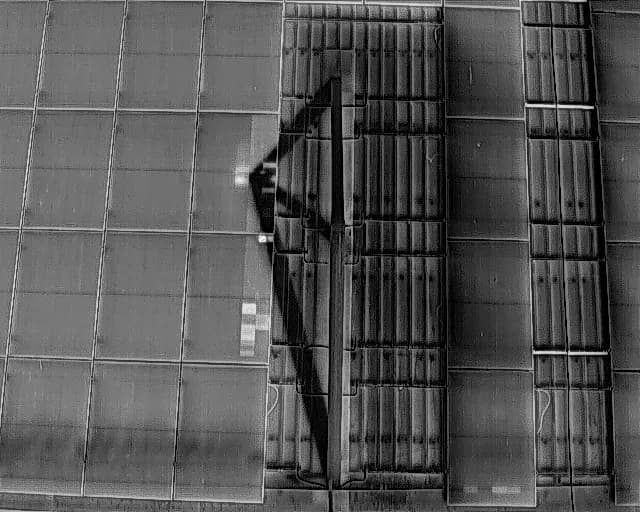
Aerial thermography can help screen large ground-mounted PV areas for thermal patterns that deserve further investigation. Drone-based acquisition is useful where many rows need to be reviewed and where location data can help technicians return to a specific module or section.
IEC 62446-3 addresses outdoor thermographic inspection of operating PV systems. Its scope includes equipment, environmental conditions, inspection procedure, personnel competence, and reporting. It does not define a software algorithm and does not impose one universal temperature range for every plant.
Agricultural sites can introduce additional acquisition challenges. Dust, uneven terrain, moving equipment, vegetation, reflective surfaces, and changing access conditions can affect flight planning or image interpretation. Irradiance, wind, cloud movement, module temperature, reflections, and viewing angle also need to be considered when collecting comparable thermal data.
A thermal image can show a localized temperature difference, but it does not by itself prove the root cause. A warm cell area, connector, or module may justify electrical or visual follow-up, while some electrical defects may produce no clear thermal pattern during the flight.
Software can help organize imagery and inspection records.
Limits and Open Questions
Agricultural PV design depends heavily on local conditions. Land-use permission, planning rules, environmental requirements, grid connection, irrigation rights, drainage, and agricultural restrictions can differ between locations. These questions should be resolved for the actual project rather than assumed from a general installation model.
The interaction between farming and PV operation can also change over time. Crops, machinery, livestock practices, access routes, and irrigation systems may evolve after the plant is built. A layout that works at commissioning should still leave enough flexibility for normal agricultural operation and maintenance.
Dust and soiling are similarly site-specific. A field beside an unpaved road may behave differently from a grassed site in the same region, and seasonal agricultural activity can change contamination patterns within the same plant. Cleaning and inspection frequency should therefore follow observed conditions.
Aerial inspection does not replace ground verification or electrical testing. Thermal data can help identify where to investigate, but it cannot confirm every fault or prove that the installation is safe.
Before construction, the unresolved questions should be made explicit: what land remains in agricultural use, who needs access, how irrigation will operate, how vegetation will be managed, and how equipment will be inspected and repaired. Those decisions shape the long-term practicality of the installation as much as the module layout itself.