Thermal Drones for Solar Inspection
Thermal drones for solar inspection: which suit PV inspection, what camera resolution and flight altitude the standard requires, and how data becomes findings.
Aerial Thermography
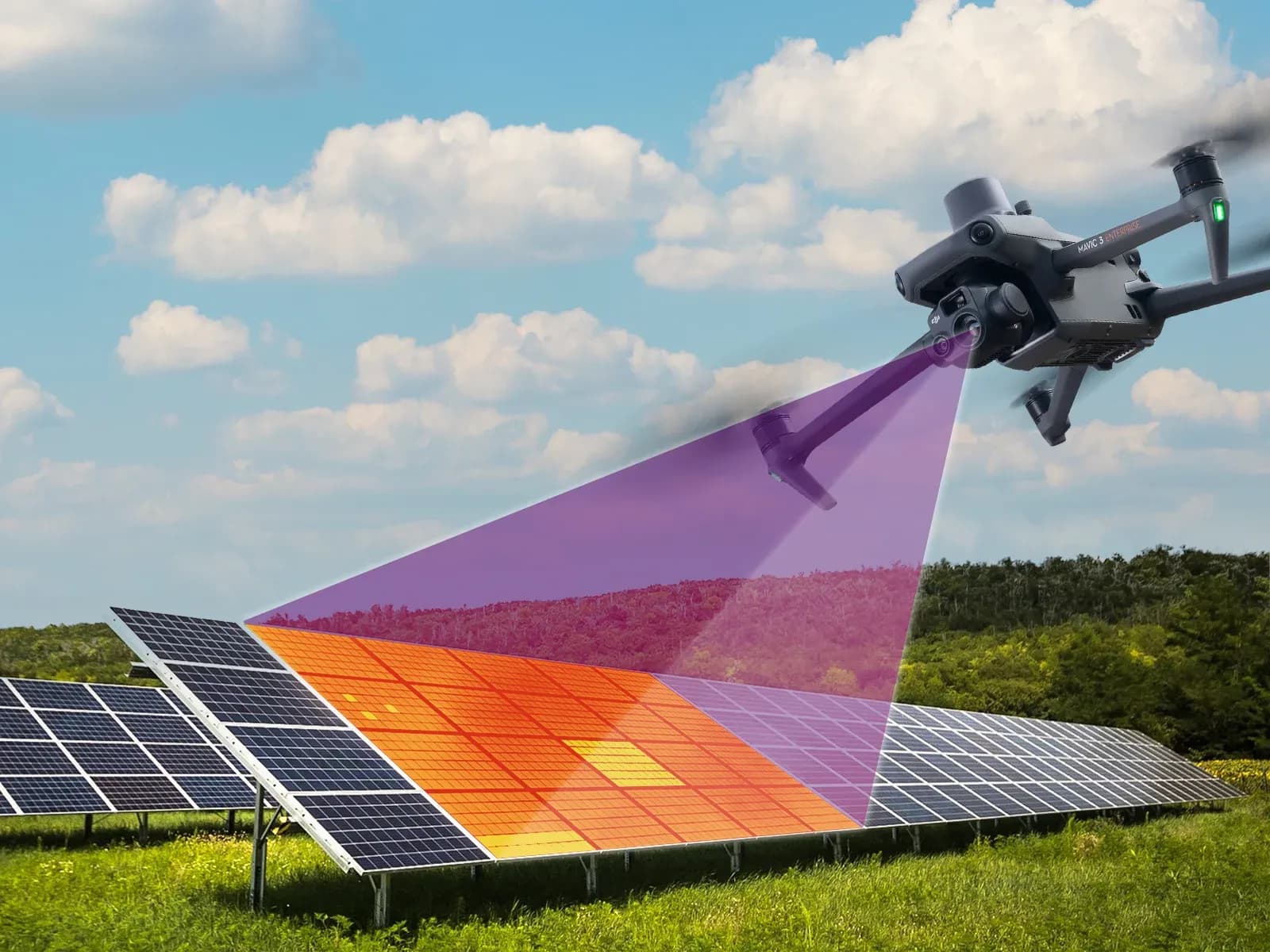
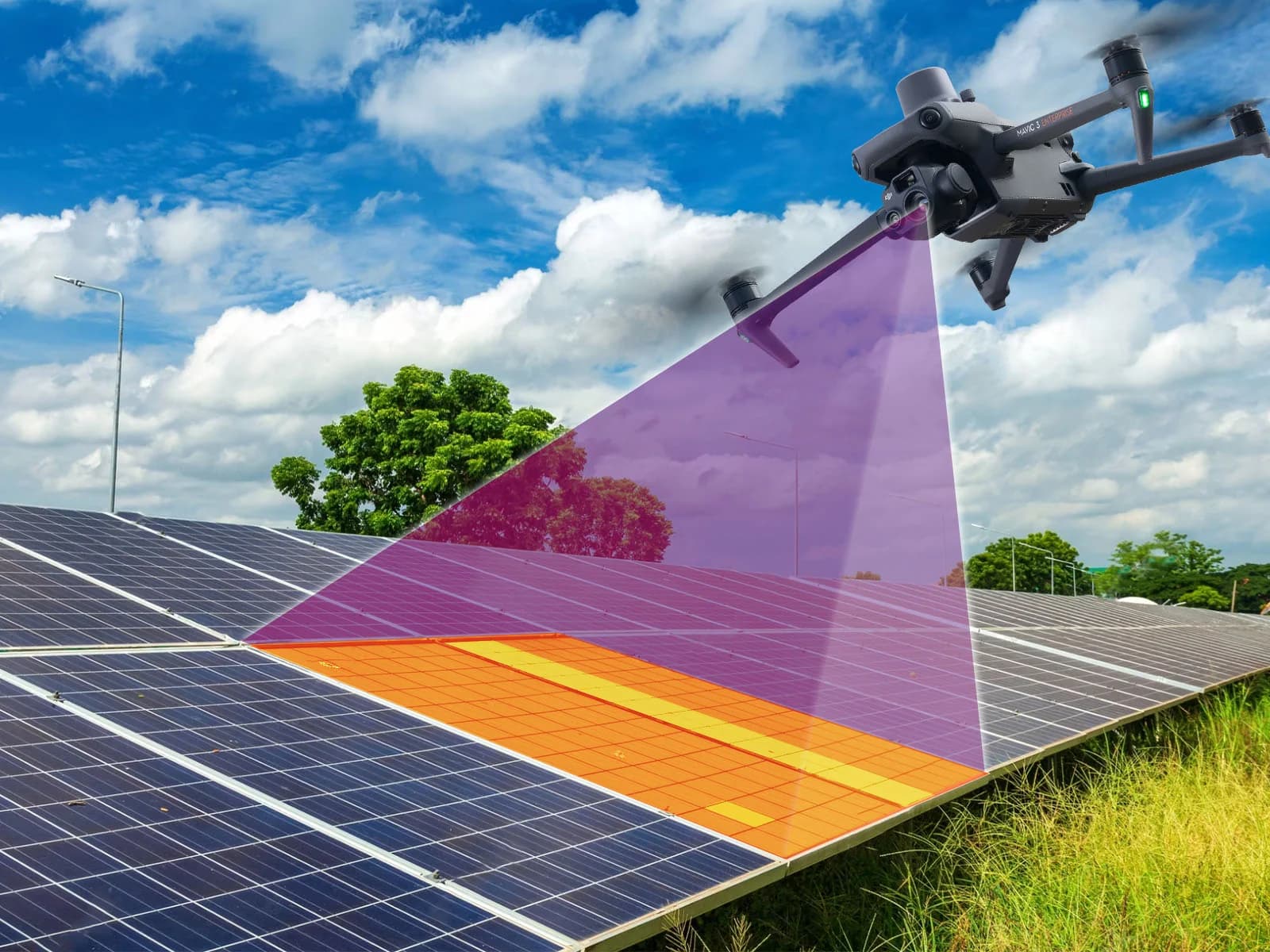
Thermal drones can help identify thermal anomalies at individual panels in solar power plants. They can make broader site coverage practical within limited inspection windows. The time needed to inspect an entire plant depends on site size, flight planning and conditions.
Choosing a Thermal Drone for Solar Panel Inspection
Heat, commonly known as infrared radiation (IR), is simply vibrating atoms. Objects emit heat based on how fast their atoms move; the faster the particles move, the hotter the object. Thermography is the examination of this heat and the application of thermal imaging.
Humans can feel heat but cannot see infrared radiation because it has an electromagnetic wavelength beyond the capability of the human eye. Thermal cameras convert infrared heat into something we can see.
Drone thermal cameras can detect many objects, though there may be exceptions, such as highly polished, shiny, and reflective items that have low emissivity and thus absorb less heat. These are difficult to detect with thermal cameras. However, objects with high emissivity, such as wood, solar panels, and even people, are easy to scan.
Advantages of Using Thermal Drones in Solar Power Plants
Thermal drones are versatile and efficient tools for obtaining data about solar power plants.
One of the undeniable advantages of drones is their ability to reach locations that are difficult, expensive, dangerous, or even inaccessible for manned inspections. Use indoors, underground, on land or at sea depends on the aircraft and operating conditions. Drones can reduce personnel exposure to hazards, but require site-specific safety procedures. Timing comparisons require a dated test identifying dataset size and quality, hardware and software versions, acquisition conditions and equal scope, separating flight, upload, automated processing, human validation and reporting.
Generally, PV panel inspection with drones can offer a more cost-effective and efficient inspection solution, allowing for more frequent thermographic inspections. This can help issues be identified and addressed sooner.
Thermal imaging drones can shorten data collection compared with manual methods. Inspection time, data quality and costs depend on plant size, acquisition conditions and the analysis required.
Should You Take Photos or Videos for PV Panel Inspection?
When performing drone inspections on solar power plants, it is recommended to capture both infrared and high-resolution color (RGB) photographs.
Do Drone Inspections of Solar Power Plants Provide Accurate Data?
IEC 62446-3 concerns outdoor PV thermography; it does not certify AI or guarantee detection accuracy. Aerial thermography can identify thermal anomalies, but detection depends on image quality, acquisition conditions and the nature of the fault. Some faults require additional testing. MapperX supports analysis and reporting of captured inspection data.
How Long Does Aerial Thermography Take?
The duration of thermographic inspection for solar power plants depends on the size of the site, flight planning and acquisition conditions. Thermal drones can provide an efficient way to collect inspection data.
Inspection time and accuracy require a dated test identifying dataset size and quality, hardware and software versions, acquisition conditions, equal scope and the accuracy metric and validation method. Flight, upload, automated processing, human validation and reporting must be assessed separately. Results can be reported with MapperX.
How Can Commercial Savings Be Achieved with Thermal Drone Inspections of PV Panels?
- Drone inspections can reduce data collection time and costs compared to traditional PV inspection methods, depending on site conditions and inspection scope.
- Inspection time savings depend on site size, flight conditions and the comparison method.
- Reports can estimate potential annual financial losses associated with uncorrected panel faults, subject to available data and modeling assumptions.
Does Aerial Thermography Extend the Lifespan of PV Panels?
Thermal drone inspections can help identify issues that warrant maintenance in solar power plants. Regular checks can support long-term performance and energy production goals. Appropriate maintenance may help extend PV panel service life, but lifespan and return on investment depend on site conditions, fault types and corrective actions.
Is MapperX Software Needed for Analyzing Data from Drone Inspections of Solar Power Plants?
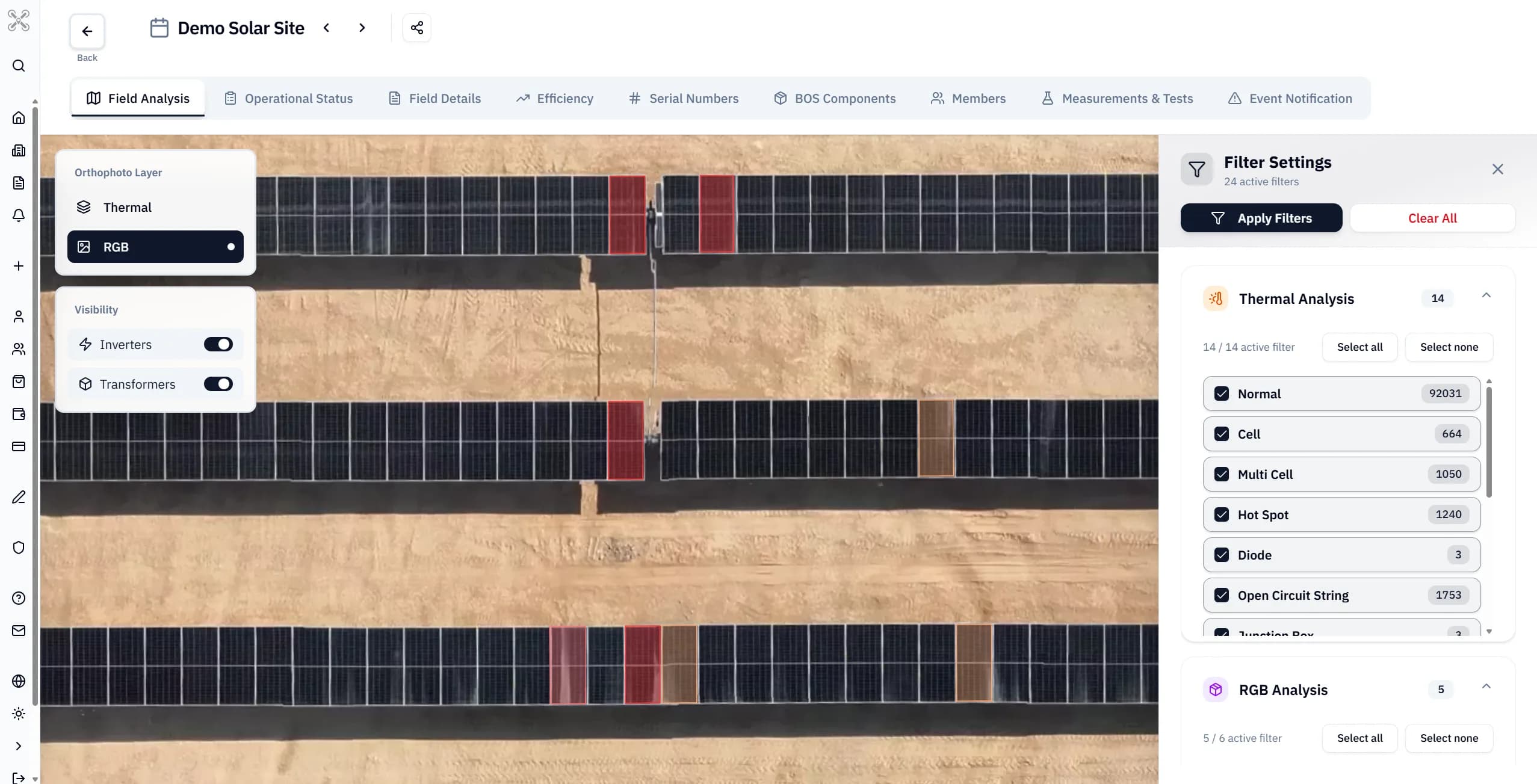
MapperX is one option for analyzing and reporting thermal drone inspection data; it is not required for every inspection.
Drones can reduce data collection time for solar power plants, but they generate a lot of information that needs to be reviewed and converted into usable formats.
If you are new to using drones for PV panel inspections, you might think that manually reviewing this data is easier and cheaper. However, examining thousands of photos or hours of video from drones requires a lot of time. The results of thermal inspections of solar power plants are reported with MapperX. The MapperX software provides world-class reporting of the data obtained from inspections in a clear and understandable format at a reasonable cost.
MapperX AI software can help analyze thermal drone images of large solar power plants and reduce manual review work. Processing time and reporting costs depend on dataset size, image quality and review requirements. For more information about “Common Misconceptions about Solar Power Plants,” you can visit the website.
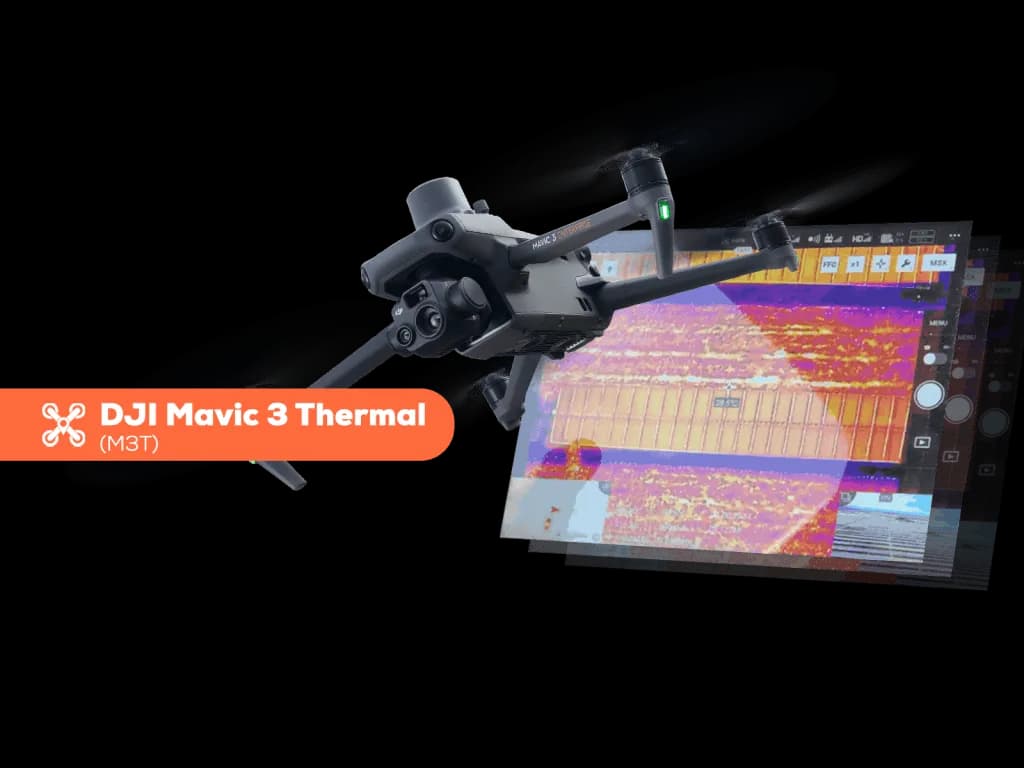
A thermal drone combines an unmanned aircraft with an infrared camera so large PV arrays can be screened from the air. For solar inspection, useful drone selection depends on thermal resolution, temperature measurement capability, positioning, flight endurance and whether the aircraft can collect consistent imagery under the required site conditions.
Thermal Drone Selection for Utility-Scale PV
A smaller aircraft can be faster to deploy, while larger enterprise platforms may offer longer endurance, stronger weather protection or different sensor options. The correct choice depends on site area, required image detail, local flight rules, weather, available pilots and the inspection method rather than a single specification.
Quick FAQ
What thermal camera resolution is useful for solar inspection?
Resolution is only one factor. The required detail depends on flight altitude, optics, ground sampling distance and the inspection objective; acquisition conditions remain equally important.